
Platform choice, catalogue structure and customer journeys
Ecommerce Solutions
Ecommerce website design and development built to sell, and to run smoothly behind the scenes
A great online store needs more than a nice theme. We design and develop eCommerce websites on Shopify, WooCommerce and custom platforms that make buying easy and connect to your inventory, accounting, CRM and marketing, so every order flows through your business without manual rework.
Ecommerce Solutions is often treated as an afterthought.
That’s where things start to fall apart.
- Checkouts that lose customers at the last step
- Orders re-keyed into accounting or fulfilment systems
- Slow product pages holding back sales
- Stores that are hard to update or scale
It should be built properly, as part of a connected system.
What a good eCommerce site does
- Helps customers find, compare and buy quickly
- Loads fast on mobile
- Syncs stock, orders and customers automatically
- Ranks for product and category searches
- Tracks revenue by channel in GA4
Our approach

Shopify and WooCommerce builds
Built on the platform that fits your catalogue size, complexity and budget.

Product and catalogue architecture
Categories and product structures designed around how customers actually shop.

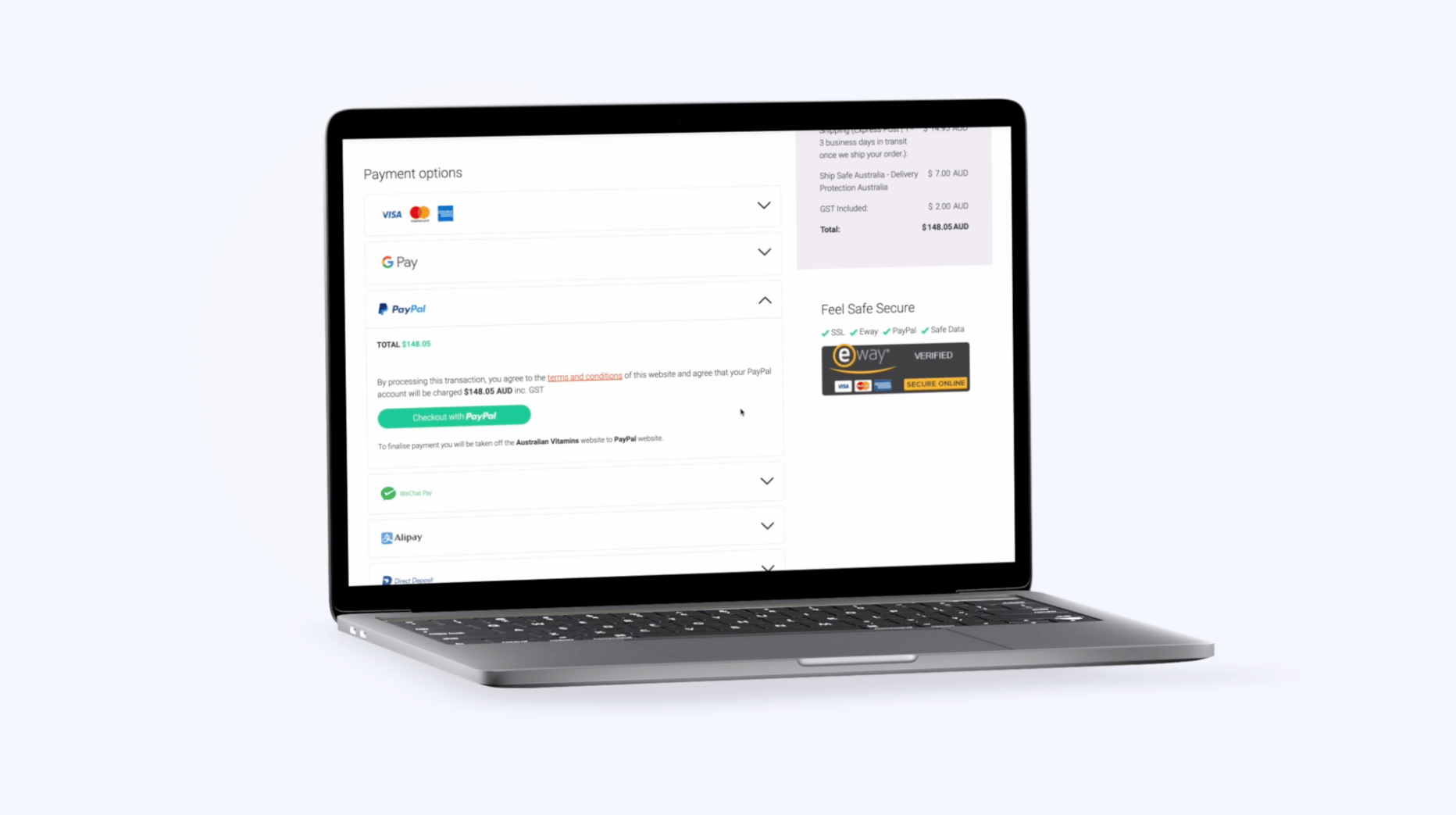
Payment and checkout integration
Checkout flows built to minimise friction and cart abandonment.
What’s included
What’s included in ecommerce solutions
eCommerce strategy
Store design
Product, category, cart and checkout UX
Shopify and WooCommerce development
Themes, apps and custom features
Integrations
Xero, inventory, POS, shipping, payment gateways and HubSpot
eCommerce SEO
Product schema, category structure and migration redirects
Conversion optimisation
Checkout testing and speed improvements

Work: Warburton Bike Park
Shuttle bus passes and daily tickets are effortlessly added to digital wallets for safe keeping.
Frequently asked questions
About Ecommerce Solutions
What ecommerce platforms do you build on?
Ecommerce Solutions covers Shopify and WooCommerce builds, including product and catalogue architecture, checkout integration and ecommerce SEO foundations. See our Shopify development page and guide on ecommerce checkout optimisation tactics.
How do you decide between Shopify and WooCommerce?
The decision depends on catalogue size, customisation needs and existing systems — Shopify suits faster, more standardised builds, while WooCommerce offers more flexibility for complex requirements.
Can an existing ecommerce store be migrated without losing sales during the switch?
Yes, with careful planning — migrations are typically scheduled around lower-traffic periods with redirects in place to preserve SEO rankings and minimise disruption.
Does ecommerce development include payment gateway setup?
Yes — payment and checkout integration is a core part of the build, configured for secure, reliable transactions from launch.
How is product data managed for large catalogues?
Through structured catalogue architecture and category planning designed to scale, so search and filtering remain usable as the product range grows.
Can an ecommerce store integrate with our existing CRM?
Yes — customer and order data can be connected to your CRM, detailed under Systems Integration & Middleware, so purchase history informs marketing and support.
Does ecommerce SEO differ from regular website SEO?
Yes — product and category pages need specific structured data and content treatment, covered under SEO & Technical Optimisation.
How is cart abandonment addressed during a build?
Through checkout flow design that minimises friction, plus abandoned cart email sequences configured under Email Marketing & Lifecycle Campaigns.
Can ecommerce sites support both B2C and B2B customers?
Yes — separate pricing, catalogues or checkout flows for B2B customers can be built into the same platform where needed, rather than requiring two entirely separate sites.
How is product photography typically handled for a new store?
Photography can be produced in-house as part of the build — see Photography & Video Production for how this connects to launch preparation.
Does ecommerce development include ongoing conversion optimisation?
Initial builds focus on strong foundations; ongoing testing and improvement is typically handled under Conversion Rate Optimisation once real traffic and data are available.
Should we use Shopify or WooCommerce?
Shopify suits most retailers wanting reliable hosting, checkout and apps with low maintenance. WooCommerce suits businesses that need deep content, custom workflows or an existing WordPress site. We recommend based on your products, integrations and team.
Can you connect our store to Xero and inventory?
Yes. We integrate eCommerce platforms with Xero, inventory and POS systems, shipping providers and HubSpot, so orders, stock and customer data stay in sync.
Can you migrate our existing store without losing sales or rankings?
Yes. We migrate products, customers and orders, map redirects for every product and category URL, and test checkout before switching over.
Do you offer eCommerce SEO?
Yes. Every store includes technical SEO and product schema, and ongoing eCommerce SEO is available through our SEO and AI search team.