
Features, users and success measures
Mobile App Development
Mobile app development in Melbourne: native and cross-platform apps, built properly
We design and develop iOS and Android apps shaped by real user needs and operational realities, from loyalty and booking apps to member and field tools. Every app is built in-house by our Melbourne team and connected to the systems behind it, so it’s reliable on day one and easy to evolve.
Mobile App Development is often treated as an afterthought.
That’s where things start to fall apart.
- Apps built without a clear reason to download
- Offshore builds that are hard to maintain
- Apps that don’t talk to your CRM, POS or loyalty system
- No plan for updates after launch
It should be built properly, as part of a connected system.
What a good app does
- Solves a real, repeat need for users
- Feels fast and native on every device
- Syncs securely with your back-end systems
- Is measured, updated and improved over time
Our approach

iOS and Android app development
Native development where performance and platform integration matter most.

Cross-platform app builds
Cross-platform frameworks where speed to market and shared codebase make more sense.

App UX/UI design
Interfaces designed around platform conventions users already understand.
What’s included
What’s included in mobile app development
App strategy and product definition
UX and UI design
Prototypes tested before build
Native and cross-platform development
iOS, Android and React Native or Flutter where suitable
APIs and integrations
CRM, loyalty, payments, POS and back-office systems
Support and releases
Updates, security patches and new features

Work: United Petroleum
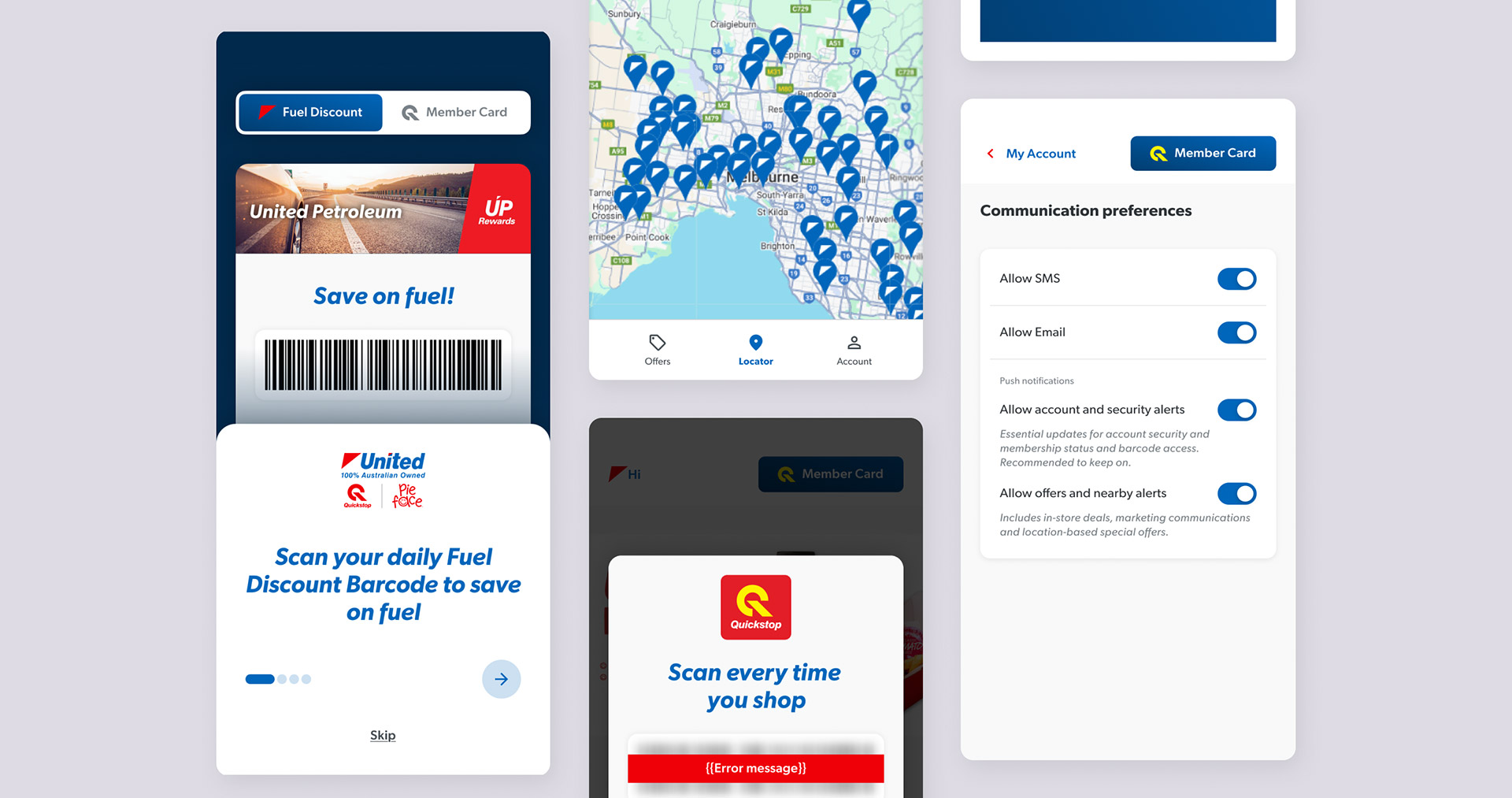
Loyalty has never been easily. A free mobile app packed with offers. Over 500,000 downloads.
Frequently asked questions
About Mobile App Development
Do you build native or cross-platform mobile apps?
Mobile App Development covers both iOS and Android native builds and cross-platform frameworks, chosen based on performance needs, budget and timeline. See our guide on how to choose a mobile app development company.
How do you decide between native and cross-platform development?
The decision weighs performance needs, budget and timeline — native suits apps needing deep platform integration, while cross-platform suits faster, more budget-conscious builds.
Does app development include App Store and Google Play submission?
Yes — submission, review requirements and store listing preparation are part of the delivery process, not left for the client to navigate alone.
Can an app be connected to the same backend as our website?
Yes — apps are typically built to share data with your website and CRM systems, avoiding duplicate data entry across platforms.
How long does mobile app development typically take?
Timelines vary significantly with feature scope, but a well-defined app with a fixed feature set typically takes several months from design through to store submission.
What happens if app store guidelines change after launch?
Ongoing maintenance is needed to keep apps compliant with evolving guidelines and OS updates — this is why budgeting for post-launch support matters, not just the initial build.
Should we validate an app idea before committing to a full build?
Often yes — a simpler web app or prototype can validate real demand before investing in a fully-featured native build, reducing the risk of building something nobody adopts.
Does app UX/UI design differ from website design?
Yes — apps follow platform-specific interface conventions users already expect, detailed under UX/UI Design, rather than simply resizing a website layout.
Can push notifications be integrated into app development?
Yes — push notification infrastructure is commonly built in, often connected to marketing automation triggers based on user behaviour.
How is app performance monitored after launch?
Through analytics tracking configured for in-app events, alongside standard GA4 and tracking work where the app connects to broader marketing data.
Does mobile app development include ongoing maintenance?
Yes — this is typically scoped as an ongoing arrangement rather than a one-off cost, since operating system updates and store requirements change regularly after launch.
Do you build native or cross-platform apps?
Both. Native iOS and Android suit apps needing maximum performance or device features. Cross-platform frameworks such as React Native or Flutter suit most business apps and reduce build and maintenance cost. We recommend based on your requirements.
How long does it take to build a mobile app?
A focused first release typically takes 12 to 20 weeks, including discovery, design, development and store submission. Complex apps with many integrations take longer.
Can the app connect to our existing systems?
Yes. We build APIs and integrations to connect apps with CRMs such as HubSpot, loyalty and POS platforms, payment gateways and custom back-office systems.
Do you support the app after launch?
Yes. We handle OS updates, security patches, bug fixes and new feature releases, so your app keeps working as iOS and Android change.