
Interviews, analytics, heatmaps and user testing
It should be built properly, as part of a connected system.
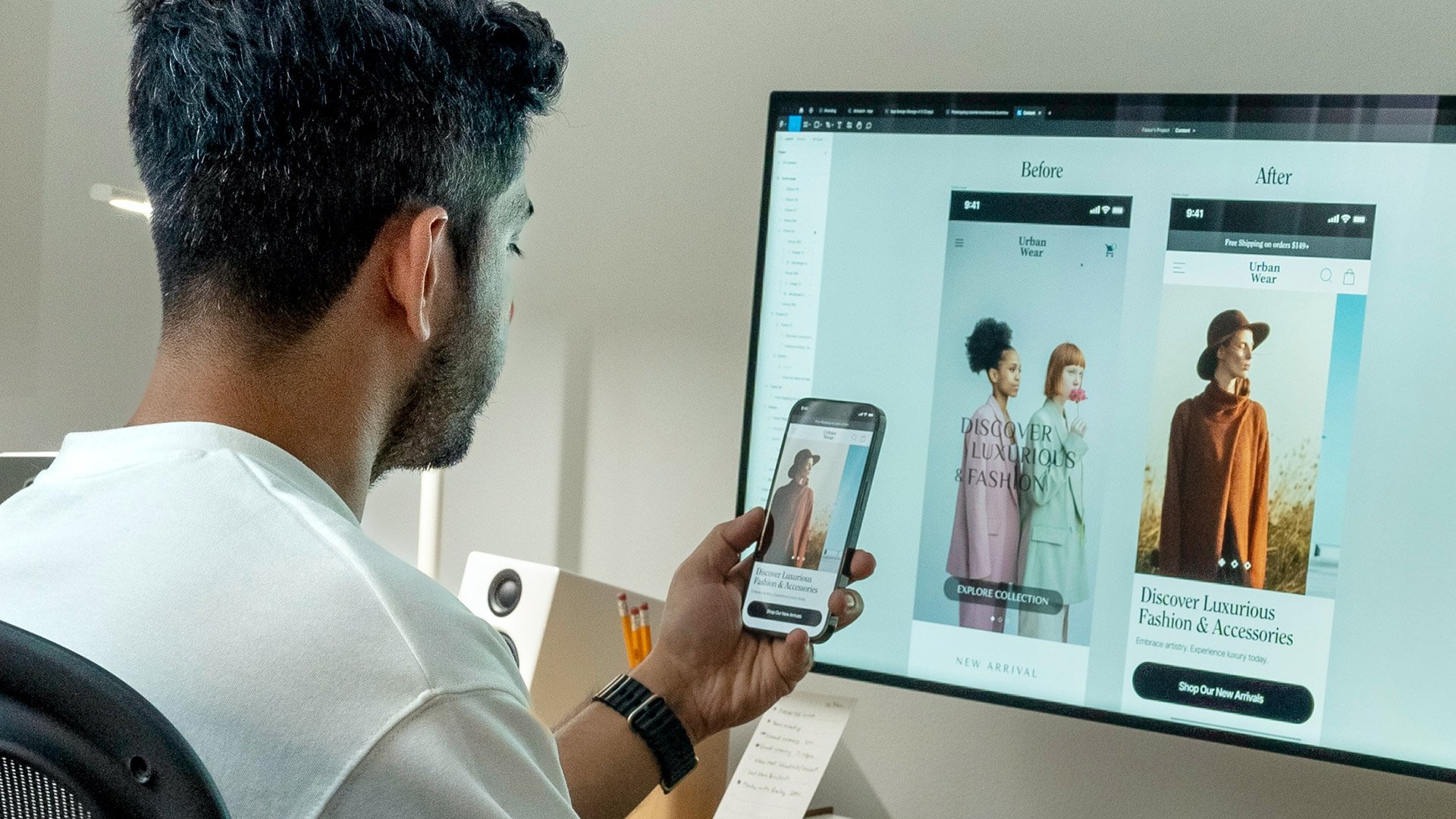

We map real user journeys end to end, identifying friction before it’s built.

Low and high-fidelity wireframes let you validate direction before development starts.

Interfaces designed for clarity and consistency across every screen.
Interviews, analytics, heatmaps and user testing
Navigation and content structure
Low and high-fidelity wireframes let you validate direction before development starts.

Clean spacious layouts for Sycle make for an elegant unique experience.
UX covers how something works and flows — navigation, journeys, structure; UI covers how it looks and feels — visual layout, buttons, interface elements. Both are handled together to avoid mismatches between them.
Before — wireframes and prototypes are validated first, so development is building against a tested plan rather than guessing at structure mid-build.
A wireframe focuses purely on layout and structure without visual styling, used to validate flow and content placement before visual design is applied.
Yes — a UX review can identify specific friction points in an existing site, often without requiring a full rebuild, particularly around navigation and form design.
Yes — accessibility is factored into interface decisions from the start, covering things like colour contrast and keyboard navigation, rather than addressed only after launch.
Through structured sessions where real users attempt specific tasks on a prototype, revealing where confusion or friction occurs before a design is finalised.
Yes — ecommerce introduces specific UX considerations around product discovery and checkout flow, covered alongside Ecommerce Solutions work.
This varies by project scope, though structured feedback rounds at wireframe and visual design stages are standard, rather than unlimited open-ended revisions.
Yes — internal tools and secure portals benefit from the same behaviour-based design approach as public-facing sites.
Structure decisions made during UX design directly affect how easily a site can be indexed and understood by search engines, connecting closely to SEO & Technical Optimisation.
UX design shapes how a website or app works, including structure, navigation and user journeys. UI design shapes how it looks, including layout, typography, colour and components. Together they make digital products clear and easy to use.
We combine analytics, heatmaps, stakeholder input, user interviews and usability testing on prototypes, choosing methods to suit the budget and timeline.
Yes. We design to WCAG guidelines, including colour contrast, keyboard navigation, clear labelling and readable typography.
We design and prototype in Figma, so stakeholders can review, comment and test before development starts.