
Yes. Each roadmap includes the rationale, budget ranges and expected outcomes needed for executive or board approval.
Goals, constraints and what’s working now
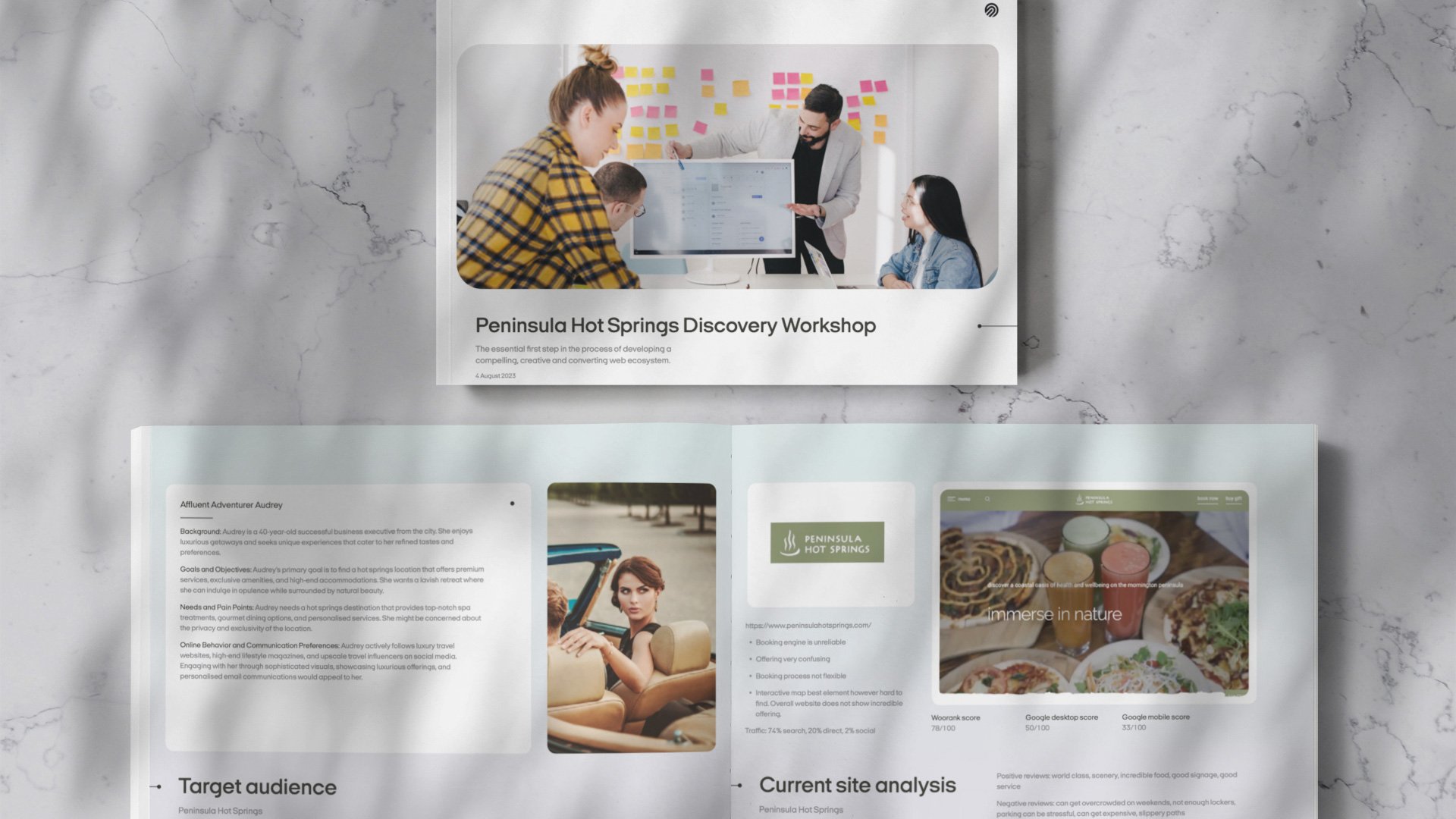

We start by mapping business goals against current digital capability, so the roadmap solves real gaps, not assumed ones.

Recommendations are made against your actual requirements and constraints, not a default technology stack.

Work is sequenced by impact and dependency, so effort goes to what unlocks the most value first.
Review cadence so the roadmap stays live

Articulating a contemporary creative collective through content-led design.
Digital strategy and roadmapping turns business goals into a sequenced, resourced plan, so platform, brand and marketing decisions all point in the same direction. It includes platform and technology recommendations, a prioritised delivery roadmap, and a growth and optimisation strategy for what happens after launch. Most roadmaps cover six to eighteen months of prioritised work.
A prioritised list of initiatives sequenced by impact and dependency, platform recommendations, and success measures agreed upfront — see Digital Strategy for how this fits into the broader engagement. It's a working reference document, not a one-off presentation.
Most roadmaps cover six to eighteen months of prioritised work, reviewed periodically rather than treated as fixed. Longer-term goals still get noted, but detailed sequencing focuses on what's actionable soon — see Digital Ecosystem Architecture for the longer-horizon planning layer.
Typically key stakeholders across leadership, marketing and operations, so the plan reflects real constraints rather than an outside view alone. Where transformation is involved, see Digital Transformation Consulting for how change management gets factored in too.
No — a roadmap sets priority and sequence at a strategic level; a project plan details tasks, timelines and resourcing for a specific initiative once it's underway, such as a website build.
Roadmaps are meant to be revisited, not locked in permanently — a genuine shift in business priorities should prompt a review, not be treated as a failure of the original plan. Regular review cadence is built into how we deliver Digital Strategy work.
Sequencing is partly driven by what's affordable now versus later — a roadmap prioritises the highest-impact, most affordable work first rather than assuming unlimited budget. This often means CRM setup comes before broader automation, for example.
Both — a well-built roadmap sequences platform, brand and marketing and creative work together, since campaigns often depend on platforms being ready first.
Decisions get made reactively, project by project, without a shared sense of priority — leading to wasted budget on lower-impact work while higher-impact opportunities wait. See our answer on what defines a successful digital strategy.
Specific, numeric targets are set for each priority before work starts, with a clear owner and review cadence — not vague goals like "improve leads." See Reporting & Insights for how this data gets tracked in practice.
Yes — the roadmap format is especially useful for smaller teams, since it makes priority sequencing explicit rather than relying on institutional knowledge. See Digital Agency Team for how we work alongside lean internal teams.
A digital roadmap is a time-based plan that sequences digital initiatives such as a website rebuild, CRM rollout or AI adoption by priority, dependency and budget, so teams know what happens now, next and later.
A digital strategy consultant reviews your goals, systems and market, then recommends what to change and in what order. At ID Digital Agency our consultants are senior practitioners who also deliver the work.
We recommend a light quarterly review and a full refresh every 12 months, or sooner if your business model, systems or market shift significantly.
Yes. Each roadmap includes the rationale, budget ranges and expected outcomes needed for executive or board approval.