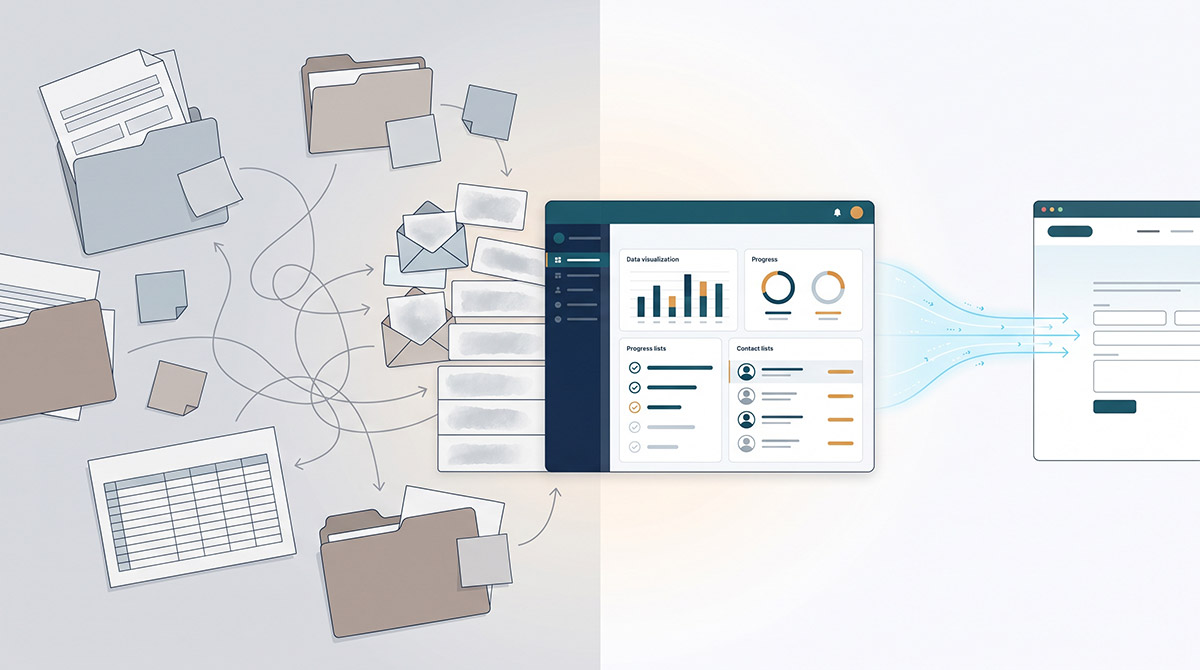


A website that looks polished but fails to generate leads, connect with your systems or support internal workflows is not doing its job. That is the real answer behind the question, what is website design and development: it is the process of planning, designing, building and improving a website so it works commercially, operationally and technically.
For organisations with any level of digital complexity, this is not just about visuals or code. It is about creating a platform that supports brand credibility, user needs, business processes and measurable performance. A good website should not sit in isolation. It should connect with your CRM, marketing platforms, reporting, ecommerce tools and internal operations where needed.
What is website design and development in practice?
Website design and development are closely related, but they are not the same thing. Design focuses on how a website works for people. Development focuses on how it works in the browser, on the server and across your wider technology stack.
Website design covers structure, user experience, interface design, content presentation and conversion paths. It shapes how users move through the site, what they notice first, how easily they complete key actions and whether the experience feels credible and clear.
Website development is the technical implementation of that design. It includes front-end code, back-end functionality, content management systems, integrations, performance optimisation, security controls and the rules that make the site operate reliably.
When these two disciplines are treated separately, problems follow. You end up with a site that is attractive but difficult to manage, or technically functional but poor for users. The strongest outcomes come from designing and developing together, with a shared view of business goals.
Website design is more than making things look good
A common misconception is that website design starts and ends with layout, colours and typography. Those things matter, but they are only part of the job.
Effective website design starts with purpose. Who is the site for? What do users need to do? What does the business need the site to achieve? Those questions influence page structure, messaging hierarchy, navigation, accessibility and calls to action.
For example, a government organisation may need to prioritise clarity, accessibility and governance. A growth-focused business may need stronger lead generation, clearer service pathways and integration with sales systems. An ecommerce brand may need product discovery, checkout efficiency and customer account functionality. The design response should change accordingly.
This is why design is strategic work, not decorative work. It translates business objectives into a user experience that makes sense.
Key parts of website design
At a practical level, website design usually includes information architecture, wireframing, user interface design, mobile responsiveness and content planning. It may also include user research, accessibility requirements, design systems and conversion-focused testing.
The detail matters. A navigation structure can reduce friction or create it. A form can support conversion or cause drop-off. A page template can help teams publish content consistently or create governance issues later. Good design decisions reduce waste after launch, not just before it.
Website development is where strategy becomes functional
Once the design direction is clear, development turns it into a working platform. This is where the website is built, configured, integrated and tested.
Front-end development handles what users see and interact with. That includes layouts, animations, responsive behaviour and browser compatibility. Back-end development handles the systems behind the interface, such as databases, user permissions, custom functionality, APIs and platform logic.
Depending on the project, development may involve a content management system, a headless setup, ecommerce functionality, third-party integrations, search features, portals, custom applications or automation workflows. Not every website needs all of that. But many organisations need more than a set of brochure pages.
This is also where technical quality becomes critical. A poorly built site may create security risks, loading issues, content bottlenecks or expensive rework. A well-built site gives teams more control, supports future changes and performs more reliably over time.
The development decisions that affect long-term value
The platform you choose, the way templates are structured and the quality of integrations all affect how useful the site will be after launch. That includes whether your team can manage content efficiently, whether data moves cleanly between systems and whether future enhancements are straightforward or painful.
There is rarely one universal right answer. A small organisation may be well served by a simpler CMS setup. A larger organisation may need stronger governance, more complex workflows, deeper integrations and a scalable architecture. What matters is fit, not feature overload.
Why website design and development should not be treated as separate projects
One of the most expensive mistakes in digital delivery is splitting strategy, design and development into disconnected streams. When that happens, handover gaps appear. Requirements get interpreted differently. Technical constraints surface too late. User needs are compromised to fit the build.
An integrated approach reduces that risk. It allows design ideas to be tested against technical reality early, and it ensures development decisions support user experience rather than undermine it.
This is particularly important for organisations with connected platforms, internal stakeholders, compliance requirements or multiple data sources. If your website needs to work with CRM records, marketing automation, ecommerce systems, booking tools or internal workflows, design and development must be planned together from the start.
That is where a senior delivery model matters. It brings commercial clarity to the project rather than treating the website as a standalone creative asset.
What a strong website project actually includes
A proper website project usually starts well before visual design and ends well after launch. The early stages often include discovery, stakeholder alignment, technical review, content planning and success metrics. Without that groundwork, projects drift.
The middle phase covers UX design, interface design, development, content implementation and integration planning. This is where teams need clear governance, decision-making discipline and realistic scope control.
After launch, the work shifts to optimisation. Performance monitoring, SEO, accessibility checks, CRO improvements, content refinement and technical maintenance all matter. A website is not a finished object. It is a business platform that should improve over time.
If that sounds broader than what many providers offer, that is the point. Businesses do not benefit from a site that launches neatly but creates operational problems six months later.
What is website design and development meant to achieve?
The answer depends on the organisation, but the outcomes should be concrete. A website should make it easier for users to find information, complete tasks and trust your brand. It should make it easier for internal teams to manage content, report on performance and reduce manual work. And it should support wider business goals, whether that means lead generation, service delivery, sales, recruitment or customer engagement.
This is why vanity metrics are not enough. Page views without conversions do not mean much. A visually impressive homepage does not compensate for poor usability. Technical sophistication is not valuable if staff cannot manage the platform efficiently.
The best websites balance four things: user experience, technical reliability, operational practicality and commercial performance. If one is missing, the platform becomes harder to justify.
Common misconceptions that cause poor outcomes
One is the belief that design happens first and development simply follows instructions. In reality, good digital projects involve collaboration from the beginning.
Another is assuming all websites need the same process or budget. They do not. A campaign microsite, a corporate website and an integrated digital platform each require different levels of planning, governance and technical depth.
A third is treating launch as the finish line. Launch is only the point at which real user behaviour starts to generate useful data. That is when meaningful optimisation begins.
For organisations managing multiple systems, another misconception is that a website can solve performance issues on its own. If the wider digital ecosystem is fragmented, the website needs to be part of a broader solution. That may include CRM integration, automation, analytics, content governance and platform rationalisation.
The commercial view matters
Too many conversations about websites stay at the level of appearance and features. Senior decision-makers need a more useful lens. What will this platform improve? What inefficiencies will it remove? What risks will it reduce? What data will it centralise? What growth will it support?
That is the difference between buying a website and investing in digital infrastructure.
For that reason, the strongest website design and development projects are not led by aesthetics alone. They are led by strategy, shaped by user needs and delivered with technical discipline. ID Digital Agency works in that space because many organisations no longer need a standalone website. They need a connected platform that supports performance across the wider business.
If you are asking what website design and development really means, the short answer is this: it is the work required to turn a website into a useful business asset, not just a digital placeholder. The more complex your organisation becomes, the more that distinction matters.