

A lot of digital teams are asking the wrong question. When they debate seo vs aeo strategy, they often treat it as a replacement decision, as if one channel has arrived to make the other obsolete. That framing creates risk. Search behaviour is changing, yes, but most organisations still need to perform across traditional search results, AI-generated answers and their own digital platforms at the same time.
The real question is not which one wins. It is how each fits into a broader performance model, and what that means for your content, data, platforms and governance.
SEO vs AEO strategy is really about search behaviour
SEO is built around ranking in search engine results pages. The objective is to improve visibility for relevant queries, earn clicks and guide users into a website journey that supports conversion. That still matters. For many organisations, especially those with complex services, long buying cycles or regulated information, the website remains the core environment where trust is built and actions happen.
AEO, or answer engine optimisation, responds to a different behaviour pattern. Users are increasingly asking full questions and expecting direct answers from AI tools, search assistants and answer-focused search features. In that environment, the aim is not only to rank a page. It is to make your information easy to interpret, cite and surface as the answer itself.
That sounds like a technical distinction, but commercially it changes how value is created. SEO often measures success through rankings, traffic and downstream conversions. AEO places more emphasis on visibility within zero-click environments, entity clarity, structured information and brand presence at the point of answer generation.
Where SEO still does the heavy lifting
For organisations with multiple services, stakeholder groups or complex user journeys, SEO remains the foundation. It supports discoverability across a broad set of intents, from early research to high-intent comparisons. It also strengthens the website as an owned asset rather than leaving discovery entirely in third-party environments.
This matters because not every query should be answered in one sentence. If someone is comparing solutions, assessing risk, reviewing governance requirements or trying to understand implementation implications, they need depth. They need architecture, not just copy. Strong SEO brings people into content ecosystems designed to educate, qualify and convert.
It also supports performance outside search. Clear site structure, strong technical foundations, fast pages, accessible content and well-organised information improve user experience across channels. The benefits flow into paid media efficiency, CRM quality, content reuse and conversion rate optimisation. Good SEO is rarely isolated. It improves the whole digital system.
Where AEO changes the rules
AEO becomes more important when users want a clear, immediate answer and when AI systems are mediating discovery. Think definitions, process explanations, comparisons, pricing frameworks, eligibility questions, location-based queries and service overviews. If your content is vague, inconsistent or hidden inside poor page structures, answer engines are less likely to trust it.
This is where many businesses misread the opportunity. They assume AEO is about writing shorter content or stuffing pages with FAQs. It is not. AEO depends on information quality, semantic clarity and technical accessibility. Your content needs to state what something is, who it is for, when it applies and why it matters. It also needs to align with the rest of your digital footprint so entities, claims and facts are consistent.
In practice, that means AEO is often less about chasing a new tactic and more about improving discipline. It rewards structured content models, schema where appropriate, logically grouped topics, clean internal relationships and content that answers real questions without padding.
SEO vs AEO strategy: the key differences
The biggest difference sits in the interaction model. SEO assumes the user will browse options and click through to evaluate sources. AEO assumes the platform may synthesise multiple sources and present a distilled response before the user visits anything.
That shift has several implications. First, click volume may not reflect total visibility anymore. A brand can influence the answer without receiving a visit. Second, authority is being interpreted more contextually. It is not just about backlinks or page-level optimisation, but whether a system can confidently understand who you are, what you do and which topics you are credible on. Third, content design matters more. Loose copy, overlapping pages and inconsistent terminology create ambiguity, and ambiguity is costly in answer-led environments.
There is also a governance issue. SEO can sometimes tolerate content sprawl for a while, even if it is inefficient. AEO is less forgiving. If your website, knowledge base, product information and third-party references conflict with each other, answer engines may select another source or generate an unreliable result.
Why a combined approach is usually the right one
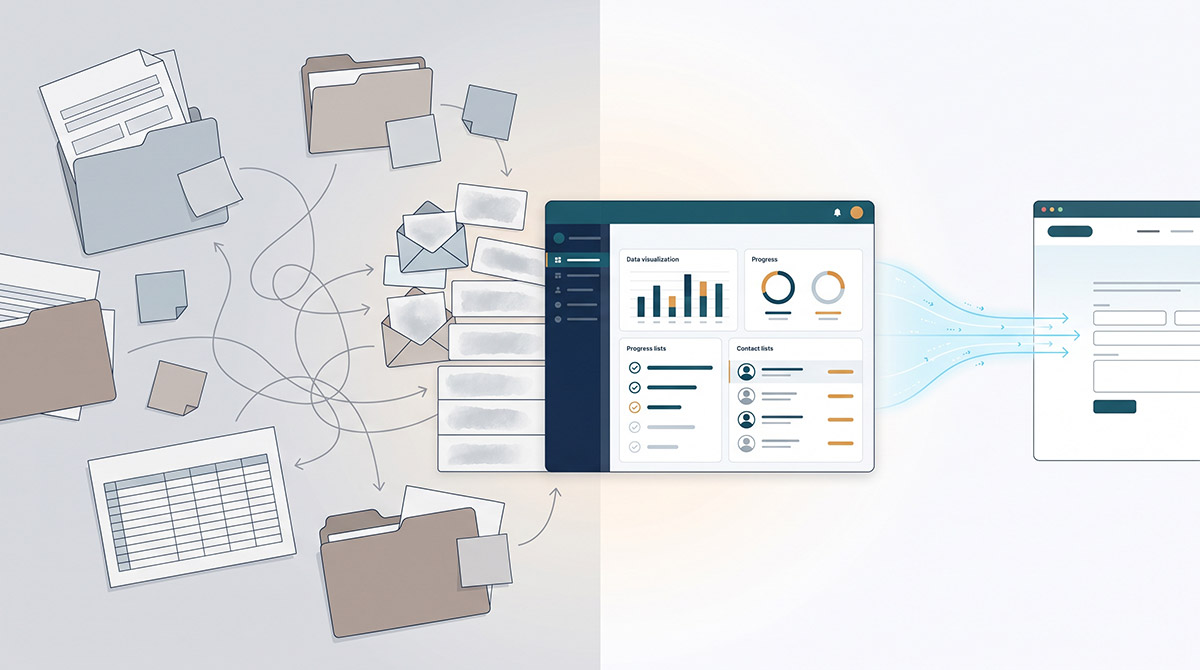
For most enterprise and mid-market organisations, the right answer is not SEO or AEO. It is coordinated SEO and AEO built on the same foundation. That foundation is a connected digital ecosystem where content, data and platforms support each other.
This is especially true for businesses with operational complexity. If your website is disconnected from your CRM, service data, product catalogue, booking system or internal workflows, optimisation becomes fragmented. Content teams rewrite the same information in multiple places. Search teams optimise pages that are out of date. Operations teams manually fix errors. Governance slips. Performance follows.
A combined strategy reduces that friction. SEO ensures your site can capture demand across the full search journey. AEO ensures your information is structured and credible enough to appear in direct-answer environments. Together, they improve visibility while protecting quality and control.
That is where an integrated delivery model matters. ID Digital Agency approaches search performance as part of a broader digital system, not a standalone channel. That means technical foundations, content structure, platform decisions and performance measurement are aligned from the start.
What a practical strategy looks like
Start with search intent, not channel labels. Identify which queries need a detailed page experience and which are better served by concise, high-confidence answers. Some topics need both. A service comparison page may support SEO, while a tightly structured summary block on the same topic helps AEO.
Then review your information architecture. Many organisations have content built around internal teams rather than user needs. That creates duplication, weak topic signals and unclear relationships between pages. A cleaner structure improves crawling, comprehension and content reuse.
Next, audit your entity and topic clarity. Can a search engine or answer engine easily determine what your organisation does, which services you provide, where you operate and what differentiates your expertise? If your language changes across pages, or key facts are buried inside design elements, visibility becomes less predictable.
Technical quality still matters. Fast load times, accessibility, mobile usability, schema implementation and crawl efficiency remain essential. AEO has not removed the need for technical discipline. If anything, it has increased the cost of poor foundations.
Content quality is the other half of the equation. Write for real questions. Answer them directly. Support the answer with context, evidence and next-step pathways. Avoid bloated pages that circle the point. At the same time, do not flatten complex topics into simplistic copy just to chase answer snippets. For higher-stakes decisions, depth still wins trust.
Measurement also needs to mature. Traditional SEO reporting focused heavily on rankings and sessions. That is no longer enough on its own. You need to track visibility across answer surfaces, branded search shifts, assisted conversions, engagement quality and how well content supports downstream actions. The right metrics depend on your buying cycle and channel mix, but the principle is straightforward: measure business impact, not just search movement.
The trade-off most teams miss
There is a temptation to over-optimise for direct answers and underinvest in owned journeys. That can produce short-term visibility while weakening your ability to qualify leads, explain complex offers and capture first-party data. The opposite mistake also happens. Some teams focus only on website traffic and ignore the fact that AI-mediated discovery is already shaping what users see first.
The balance depends on your market, sales model and level of complexity. An ecommerce brand with straightforward products may lean harder into answer-focused optimisation for product and comparison queries. A government body or enterprise service provider may need stronger emphasis on authoritative, well-governed content hubs that support both search engines and human decision-makers.
Either way, patchwork tactics will not hold up. If your platforms, content and data are disconnected, seo vs aeo strategy becomes a false debate because neither approach can perform at its best in a fragmented environment.
The organisations that will benefit most are the ones that treat search as part of digital infrastructure. They will build clearer content models, stronger technical foundations and tighter governance around how information is created and maintained. That work is less fashionable than chasing the latest feature, but it produces more control and more durable performance.
The useful way to think about this is simple: optimise to be found, optimise to be understood and optimise to convert. If your digital ecosystem can do all three reliably, you will be in a far stronger position than competitors still arguing about whether SEO or AEO matters more.