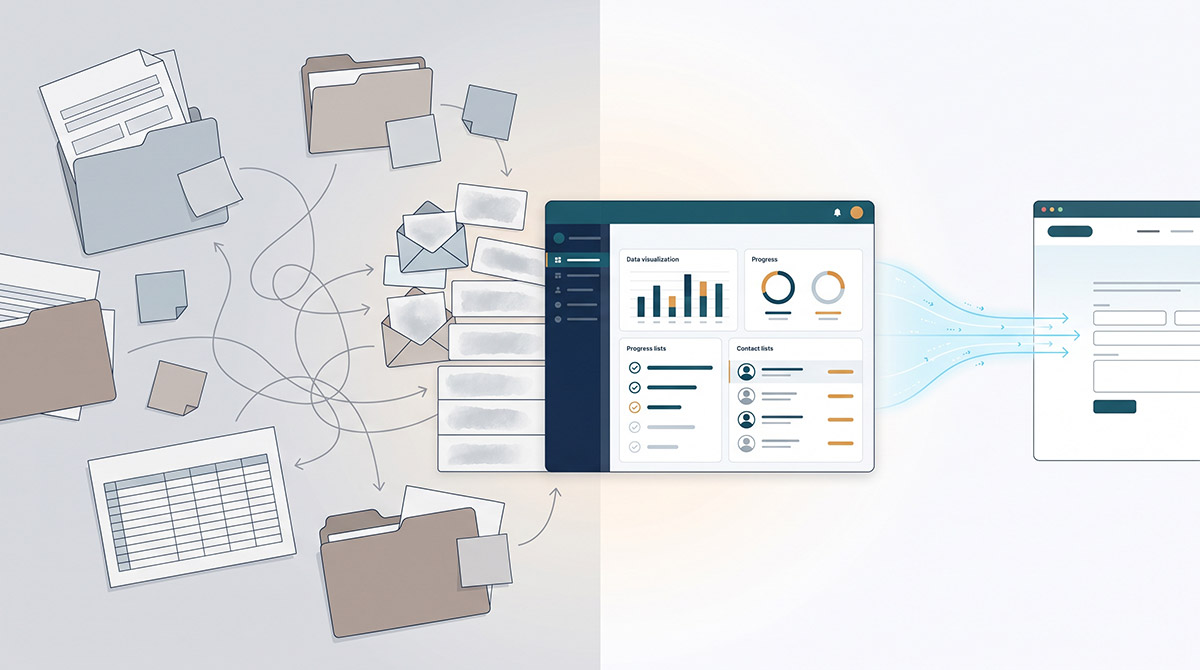


A website can look polished in a stakeholder presentation and still fail the moment it meets real users, real content and real business rules. That is usually where the website design and web development difference becomes obvious. One shapes how the experience should work and feel. The other determines whether it actually works, scales and integrates properly.
For organisations managing more than a basic brochure site, confusing the two creates expensive problems. You end up approving page mock-ups when the real issue is platform architecture, or investing in code when the real problem is poor UX, weak content hierarchy or unclear conversion paths. The disciplines are closely connected, but they are not interchangeable.
What is the website design and web development difference?
In plain terms, website design is concerned with user experience, interface behaviour, visual communication and content structure. Web development is concerned with building the functional product, including front-end code, back-end systems, integrations, data handling, performance and technical stability.
Design answers questions such as: What should users see first? How should they move through the site? What information builds confidence? Where should calls to action sit? How does the experience adapt across devices and accessibility needs?
Development answers a different set of questions: What platform is right for the business? How will content be managed? How will forms connect to a CRM? How will product data sync with other systems? How will the site perform under load, remain secure and support future changes without creating technical debt?
That distinction matters because a website is not just an interface. For many organisations, it is tied to lead handling, ecommerce, internal workflows, marketing systems, customer data and reporting. A site that looks strong but is poorly built will create operational friction. A site that is technically sound but poorly designed will struggle to convert.
Website design focuses on experience and decision-making
Good website design is not decoration. It is commercial problem-solving expressed through structure, layout, content flow and interaction choices.
A designer considers how users arrive, what they need, what may confuse them and what should happen next. That includes navigation logic, page hierarchy, wireframes, visual systems, mobile responsiveness, accessibility considerations and the way brand expression supports trust. In complex organisations, design also has to account for multiple audiences, approval pathways and content governance.
This is why design decisions have a direct commercial effect. If service information is buried, forms ask for too much too early, or key proof points appear too late, conversion rates suffer. If the page structure is inconsistent, content teams struggle to maintain standards. If accessibility is treated as an afterthought, the organisation increases both user friction and risk.
Design also helps define what should be built in the first place. That point is often missed. Before development begins, strong design work can expose whether a feature is genuinely useful, whether content can be simplified or whether a user journey needs to be rethought entirely.
Web development turns intent into a working system
Web development is where strategic and design decisions become a real platform. It includes the code, frameworks, CMS configuration, databases, APIs, hosting considerations, security controls and integrations required to make the site operate reliably.
Front-end development translates approved designs into interactive pages that work across browsers and devices. Back-end development handles the application logic, content management, user permissions, data processing and connections to third-party tools. Depending on the project, development may also involve ecommerce functionality, member areas, search logic, workflow automation or custom application features.
This is where complexity rises quickly. A contact form is not just a contact form if it needs to route enquiries by region, push data into a CRM, trigger internal notifications, tag users for marketing automation and maintain auditability. A product catalogue is not just a catalogue if stock, pricing and customer data need to stay aligned across multiple systems.
Development quality affects speed, security, maintainability and long-term cost. Quick fixes can look efficient in the short term, but they often create brittle codebases, duplicate processes and expensive rebuilds later. For organisations with growth plans, governance requirements or connected platforms, the technical foundation matters as much as the interface.
Where design ends and development begins - and where it does not
The cleanest explanation is this: design defines the intended experience, development builds the functioning product. In practice, there is overlap.
For example, a designer may specify how a calculator tool should behave, but a developer will determine how that behaviour is built and whether it is technically feasible within the chosen platform. A designer may propose content modules that create flexibility, while a developer shapes those modules into manageable CMS components that editors can actually use.
This overlap is healthy when both disciplines are involved early. It becomes a problem when they operate in sequence with no shared planning. Designs that ignore technical constraints often lead to rework. Development that proceeds without UX thinking often produces clunky, inefficient experiences.
That is why mature projects do not treat design and development as separate handovers. They treat them as connected streams within a broader delivery model.
Why organisations often get this wrong
Many businesses still buy websites as if they are buying a visual asset. They review homepage concepts, compare aesthetics and assume the rest will sort itself out. That approach can work for a very simple site. It breaks down fast when the website needs to support lead management, ecommerce operations, internal teams, compliance requirements or multi-platform reporting.
Another common issue is assuming development starts only after design is signed off. In reality, platform choice, technical architecture and integration requirements should influence design decisions from the start. If they do not, businesses can end up approving layouts that are expensive to build, difficult to manage or incompatible with operational needs.
There is also a procurement problem. Some providers lead with visual mock-ups because they are easier to sell than governance, data structures or integration planning. The result is a site that may impress in review meetings but underperform in the business.
The real business impact of getting the balance right
When design and development are aligned, the website performs as a business system rather than a standalone marketing asset. Users can find what they need quickly. Internal teams can manage content without workarounds. Data moves where it should. Reporting is cleaner. Future enhancements are easier to implement.
This has practical effects across the organisation. Marketing gets better conversion pathways and cleaner attribution. Operations sees fewer manual tasks. Sales gets more usable lead data. IT inherits a platform with clearer governance and less patchwork. Leadership gets a digital asset that supports growth instead of absorbing budget through avoidable fixes.
That is also where a connected delivery approach matters. For organisations with digital complexity, the question is rarely just design versus development. The real issue is how both connect to strategy, platform architecture, search performance, integrations, automation and long-term optimisation. ID Digital Agency works in that space because the website is often only one part of the system.
How to assess whether you need design work, development work or both
Start with the problem, not the label. If users are dropping off, content is hard to navigate or the site feels confusing, the primary issue may be design. If the site is slow, unstable, hard to edit, difficult to integrate or limiting business processes, development may be the bigger constraint.
Often, the answer is both. A redesign on top of weak technical foundations simply repackages the same problems. A rebuild without UX improvement can preserve friction in a newer codebase. The right sequence depends on business goals, platform condition, internal capability and how much change the organisation can absorb at once.
This is also where discovery matters. Before committing to a redesign or rebuild, organisations should understand user needs, content requirements, system dependencies, governance expectations and growth plans. Without that, decisions are based on surface symptoms rather than root causes.
Website design and web development difference in one line
If you need the short version, it is this: website design determines how the site should work for people, and web development determines how the site will work in reality.
Both disciplines shape performance. Both affect risk. Both influence whether a website becomes a useful business asset or another disconnected platform to manage.
The more complex your digital environment, the less useful it is to treat design and development as separate purchases. The better question is whether the people building your website understand the full chain from user experience to system integration to ongoing performance. That is usually the difference between a site that looks finished and one that actually does its job.