

A platform decision usually looks simple on a slide and messy in practice. The real question behind headless CMS vs WordPress is not which option is more modern. It is which one gives your organisation better control, lower operational friction and a platform that still makes sense in three years.
For some teams, WordPress is the right call because it is fast to deploy, familiar to marketers and capable of handling a large amount of publishing without heavy custom architecture. For others, a headless CMS makes more sense because content needs to move across websites, apps, portals, kiosks or other channels, and the business cannot afford to keep forcing everything through a traditional website framework. The right answer depends less on trend and more on complexity.
Headless CMS vs WordPress: the core difference
WordPress is traditionally a coupled content management system. That means the content management layer and the front-end presentation layer are closely linked. Editors create content in the CMS and WordPress renders it directly on the website using themes, templates and plugins.
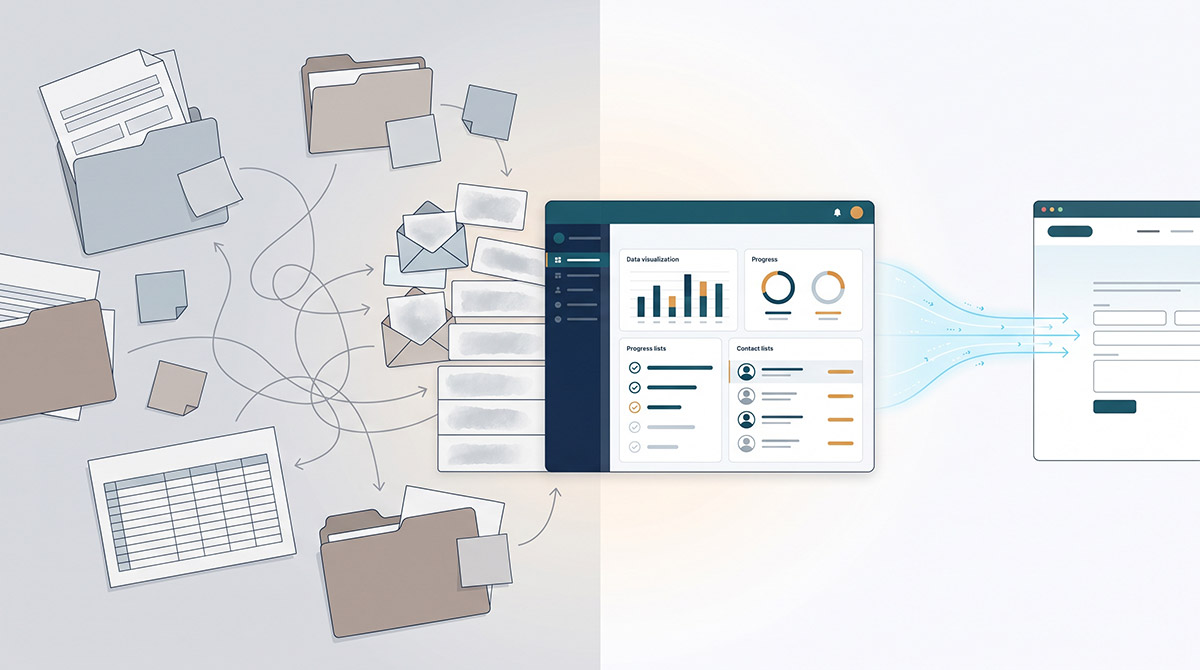
A headless CMS separates those layers. Content is managed in one system and delivered via APIs to whatever front end needs it. That front end might be a website, but it could also be a mobile app, customer portal, product interface or in-store display. The CMS becomes the source of truth for content, not the thing that determines how every experience is built.
That architectural difference changes more than development approach. It affects governance, editorial workflow, integration strategy, performance options and the amount of freedom your team has to shape digital experiences over time.
When WordPress is the better business decision
WordPress remains a strong choice for many organisations, particularly when the primary requirement is a content-led website managed by an internal marketing team. It is well understood, supported by a large ecosystem and efficient for common publishing needs.
If your business needs a corporate site, campaign landing pages, blog publishing, lead generation and moderate integrations with CRM or marketing tools, WordPress can do the job well. It also tends to suit teams that want a familiar editing experience without asking internal stakeholders to rethink how content operations work.
This is especially true when speed to market matters. A well-scoped WordPress build can be delivered efficiently, and for organisations without multi-channel publishing requirements, the extra architectural overhead of headless may not add enough value to justify the investment.
That said, WordPress becomes harder to manage when too much business logic, too many plugins and too many workaround integrations pile up over time. What starts as a practical website can become a fragile operating environment if governance is poor.
WordPress strengths
WordPress is usually strongest where publishing volume is high but content distribution is relatively straightforward. It offers a mature editorial interface, broad plugin availability and easier access to content administrators and developers in the market.
It also works well when your website is the main digital product rather than one part of a broader ecosystem. If the site does not need to feed structured content into multiple platforms, the simplicity of a traditional CMS can be an advantage.
Where WordPress starts to strain
The problems usually appear when organisations expect WordPress to act as website, integration hub, customer experience platform and internal workflow engine all at once. That often leads to plugin dependency, duplicated data and unclear ownership of critical functions.
At that point, the issue is not that WordPress is bad. It is that the business is asking a website platform to carry too much architectural responsibility.
When a headless CMS makes more sense
A headless CMS is generally the stronger option when content needs to be reused across multiple channels or when the front-end experience needs more technical freedom than a traditional CMS comfortably allows.
This matters for enterprise organisations, government teams and growing businesses with multiple audiences, multiple systems and more than one digital touchpoint. If your content needs to appear consistently across a public website, secure portal, mobile app and campaign environment, a headless model gives you far better control over structure and reuse.
It also suits businesses that need tighter integration between content, product data, customer systems and operational platforms. In these environments, content is not just publishing material. It is part of a broader digital ecosystem.
A headless CMS can support that more cleanly because the content model is structured and delivery is API-driven. Development teams have more control over the front end, which can improve performance, flexibility and future extensibility when implemented properly.
Headless strengths
The biggest advantage is separation of concerns. Editors manage content. Developers build front ends using the frameworks and performance strategies best suited to the experience. Integration becomes more deliberate because systems are connected by design rather than patched together later.
There is also a governance benefit. Structured content models make it easier to enforce consistency across channels, which is valuable for organisations with compliance requirements, multi-team publishing or complex approval workflows.
Where headless can be the wrong move
Headless is not automatically better. It requires stronger technical planning, more disciplined content modelling and often a higher initial investment. If your team only needs a straightforward marketing site, headless can introduce unnecessary complexity.
It can also frustrate stakeholders if the editorial experience has not been designed properly. A technically elegant platform still fails if marketers cannot work efficiently or if basic publishing becomes dependent on development support.
Cost is not just build cost
A lot of headless CMS vs WordPress comparisons get stuck on upfront budget. That is only part of the picture.
WordPress often looks cheaper initially, and sometimes it is. But the longer-term cost depends on maintenance, plugin management, security oversight, hosting complexity, performance tuning and the effort required to keep integrations stable. If your stack is growing and your site is becoming more operationally important, those costs add up.
Headless usually carries a higher implementation cost because architecture, front-end development and integration design are more involved. But it may reduce future rework if your roadmap includes multiple digital products, evolving user journeys or broader system integration.
The commercial question is simple: are you paying for complexity now because the business needs it, or avoiding complexity now only to pay for it later in rebuilds, workarounds and process inefficiency?
Performance, security and scalability
These areas are often oversimplified.
WordPress can perform very well when it is engineered properly. It can also become slow and vulnerable when it is overloaded with unnecessary plugins, poor hosting decisions and weak update discipline. The platform itself is not the whole story. Delivery quality matters.
A headless CMS can improve performance because front ends are often built with modern frameworks and optimised delivery strategies. Security posture can also improve because the content repository is not exposed in the same way as a traditional CMS-driven site. But neither benefit is automatic. Poorly planned headless builds can be expensive, overengineered and difficult to govern.
Scalability has the same caveat. WordPress scales well for many use cases. Headless scales better where content, channels and system interactions are expanding. The right choice depends on what is actually scaling: page volume, traffic, editorial teams, channels, integrations or all of the above.
Editorial teams need a platform they can actually use
This point gets ignored far too often. The best architecture on paper means little if your internal team cannot publish quickly, maintain standards or understand the workflow.
WordPress usually wins on familiarity. Many teams already know how it works, which reduces training friction. For marketing-led organisations, that matters.
Headless platforms vary more widely in editorial quality. Some offer excellent interfaces. Others are clearly built with developers in mind first. If you are considering headless, evaluate the content operations model with the same seriousness as the technical stack. Publishing efficiency, approval workflows, reusable components and governance controls should all be part of the decision.
So which should you choose?
Choose WordPress if your organisation needs a well-governed website platform, your publishing requirements are relatively conventional and your roadmap does not rely heavily on multi-channel content delivery or complex system architecture.
Choose a headless CMS if your business is building a connected digital ecosystem, needs content to move across multiple experiences and wants more control over integration, structure and future platform flexibility.
For many organisations, this is not really a CMS decision. It is an operating model decision. Are you buying a website platform, or are you investing in a content foundation that supports a broader digital environment?
That is where a senior delivery partner matters. ID Digital Agency works with organisations that need more than a standalone site, and platform selection is only useful when it aligns with governance, integration, performance and long-term growth.
The smart choice is the one that fits your business as it actually operates, not the one that sounds more advanced in a procurement meeting.