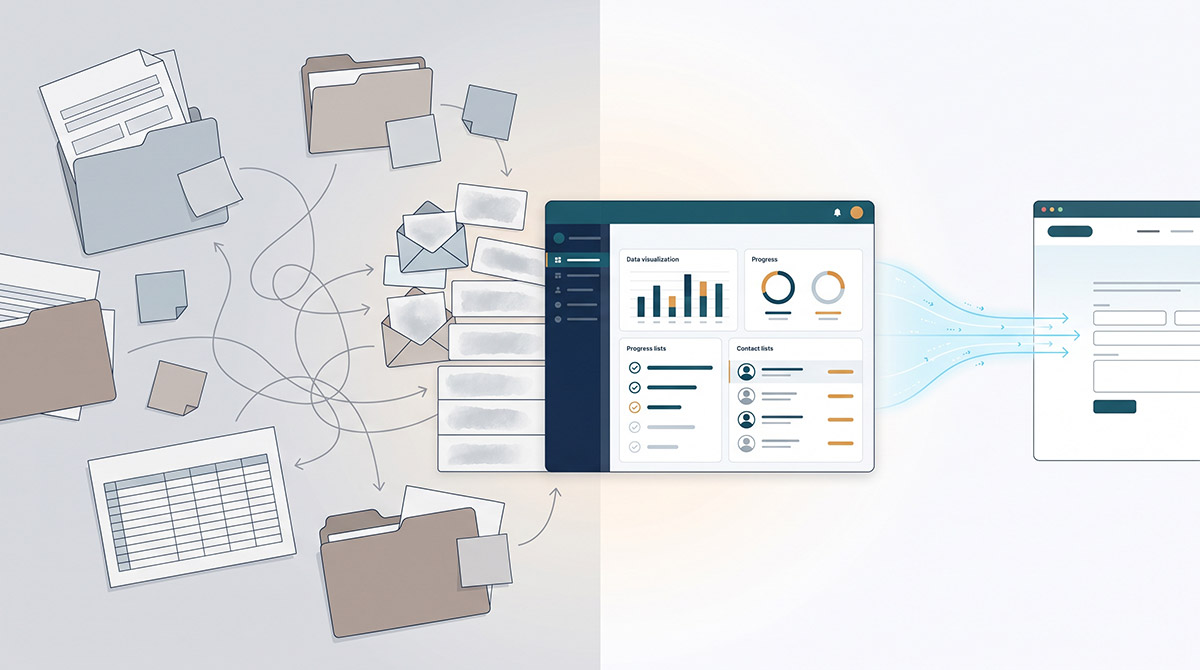


Most integration problems start well before any API is touched. They start when a business tries to connect platforms without agreeing on what the integration is meant to fix, who owns the data, or how success will be measured. If you are working out how to plan platform integrations, the real job is not just technical delivery. It is reducing operational friction, protecting data quality and making sure each system has a clear role in the wider ecosystem.
That matters because platform integrations have a habit of exposing every weak decision around process, governance and platform selection. A disconnected CRM, an ecommerce platform with inconsistent product logic, or a website pushing poor-quality leads into sales workflows will not improve just because the systems are connected. In some cases, integration simply helps bad data move faster.
How to plan platform integrations with the business model in mind
The first step is to stop thinking about integrations as features. They are operating decisions. Every connection between platforms affects how teams work, how customers move through channels, and how management sees performance.
Start with the commercial context. What is the business trying to improve? For one organisation, the issue may be duplicate customer records across sales and service systems. For another, it may be slow order processing, poor lead attribution, or teams manually re-entering data between a website, CRM and finance platform. The integration plan should be built around those specific operational constraints, not around a generic ambition to make systems "talk to each other".
This is also where trade-offs become clear. A highly customised integration may match current workflows closely, but it can increase maintenance overhead and limit future platform changes. A more standardised approach may be less elegant in the short term, but easier to govern and scale. There is no universal right answer. It depends on the organisation's complexity, internal capability and appetite for technical debt.
Start by mapping the current ecosystem
Before planning what should connect, map what already exists. That sounds obvious, but many businesses work from assumptions rather than facts. Different teams often hold different versions of the same process, and vendor documentation rarely reflects the reality of day-to-day operations.
A proper ecosystem map should identify the key platforms in use, what each one is responsible for, what data it creates or stores, and where manual workarounds currently exist. Include the website, mobile apps, CRM, ERP, marketing automation tools, ecommerce systems, booking engines, support platforms and reporting layers. Then look at the human side. Where are staff exporting spreadsheets, copying records, fixing errors by hand or bypassing formal workflows?
This exercise usually reveals the real integration priorities. The obvious pain point is not always the most important one. For example, a marketing team may want real-time lead syncing, while the bigger business risk sits in inconsistent customer data between operations and finance. Good planning puts effort where the operational and commercial return is strongest.
Define system roles before you define data flows
One of the most common planning mistakes is discussing data fields before agreeing on platform roles. If two or three systems all behave as the source of truth for the same data set, the integration will become unstable quickly.
Each platform needs a defined purpose. The CRM might own customer relationship history and lead status. The website might capture enquiries and preference data. The ERP might own pricing, inventory or invoicing. A marketing automation platform might manage segmentation and campaign activity, but not core customer records. Once those roles are agreed, data flow decisions become clearer.
Without this discipline, integrations often create duplication instead of control. Teams end up asking why records do not match, why updates are overwritten, or why reporting cannot be trusted. Those are not integration failures in isolation. They are planning failures.
Ask the hard questions early
This is the point where decision-makers need direct answers to a few uncomfortable questions. Which system wins when records conflict? How often should data sync? What data actually needs to move, and what can stay where it is? Who approves schema changes? What happens if one platform is replaced in 18 months?
If those questions are left until development starts, cost and risk rise quickly.
Plan for process, not just platform connectivity
A useful integration supports a defined business process. It should help a lead move into sales, an order move into fulfilment, a member record move into service delivery, or a customer event trigger the right communication. If there is no agreed process behind the connection, the integration can become expensive plumbing with no real operational gain.
That is why process mapping matters as much as technical discovery. Look at what should happen from trigger to outcome. What event starts the workflow? What validations need to happen? Where are exceptions handled? Which team needs visibility, approval or intervention?
In complex organisations, this often reveals that the problem is partly procedural. A platform may be capable of supporting the workflow, but internal rules, inconsistent data entry or unclear ownership are what break the process. Integration planning should account for that. Otherwise the business pays to connect systems while keeping the same bottlenecks.
How to plan platform integrations without creating future risk
Good integration planning is as much about what you avoid as what you build. Shortcuts taken early often show up later as reporting issues, failed automations or expensive redevelopment.
A sensible plan should cover architecture, governance and resilience. Architecture defines how systems connect and where logic sits. Governance defines who owns decisions, data standards and change control. Resilience covers monitoring, error handling and fallback procedures when something inevitably fails.
Real-time integration is a good example of where discipline matters. It can improve speed and customer experience, but it also increases dependency between systems. If one platform goes down or its API limits are reached, downstream processes may stop. Scheduled syncs can be less elegant, yet more stable and easier to manage. The right model depends on the use case, the cost of delay and the tolerance for failure.
Integration method should follow business need
Not every connection needs custom middleware or a fully bespoke build. Some use cases are well served by native connectors or integration platforms. Others need custom development because the business rules are too specific, the data model is too complex or the governance requirements are too strict.
The mistake is choosing the method based on convenience alone. A quick connector can be useful, but if it cannot support validation, transformation or audit requirements, it may create more work later. Equally, a custom build is not automatically better if the process itself is still unsettled.
Set success measures before delivery begins
If success is defined as "integration completed", the business is already settling for too little. The better question is what should improve once the integration is live.
That may include lower manual processing time, fewer duplicate records, faster response times, improved lead handling, cleaner reporting or stronger conversion performance. In larger environments, success may also include better governance, clearer ownership and reduced reliance on spreadsheets and manual interventions.
These measures should be practical and observable. That creates accountability during delivery and gives teams a reason to refine the integration after launch. Platform integrations are rarely perfect on day one. They need tuning, monitoring and operational feedback.
Involve the right people, not just the loudest stakeholders
Integration projects often stall because key decisions are made by only one function. Marketing focuses on campaign flow. IT focuses on systems compatibility. Operations focuses on efficiency. Finance focuses on controls. All are valid, and none is sufficient on its own.
The planning phase needs input from the people who understand the data, the workflow and the business consequences of failure. That usually means a mix of digital, operations, technology and executive stakeholders. It also means involving the teams who actually use the systems, because they are often closest to the workarounds that planning needs to eliminate.
A senior delivery partner can help keep those discussions grounded. At ID Digital Agency, that typically means aligning platform, UX, technical and performance decisions around the same operational outcome rather than treating them as separate workstreams.
Treat launch as the start of governance
An integration is not finished when the data starts moving. Launch is where governance begins. APIs change, teams change, platforms get replaced, and business rules evolve. Without ongoing ownership, even a well-built integration can degrade quietly.
That is why planning should include post-launch monitoring, alerting, documentation and review cycles. Who checks failed syncs? Who approves field mapping changes? Who reviews whether the integration is still serving the original business objective? These are not admin details. They are what preserve performance and control over time.
If you want platform integrations to support growth, plan them like part of the business infrastructure, not a bolt-on technical task. The strongest integration strategy is usually the one that makes the digital ecosystem simpler to manage, clearer to govern and easier to improve six months from now.