

Most websites do not have a traffic problem. They have a conversion problem.
That is why conversion rate optimisation services matter. If your site attracts the right audience but too few users enquire, buy, book or complete a key action, more media spend will only amplify the waste. The real issue is usually friction across the journey - unclear messaging, slow pages, weak page hierarchy, broken trust signals, poor form design, disconnected systems, or an offer that does not match user intent.
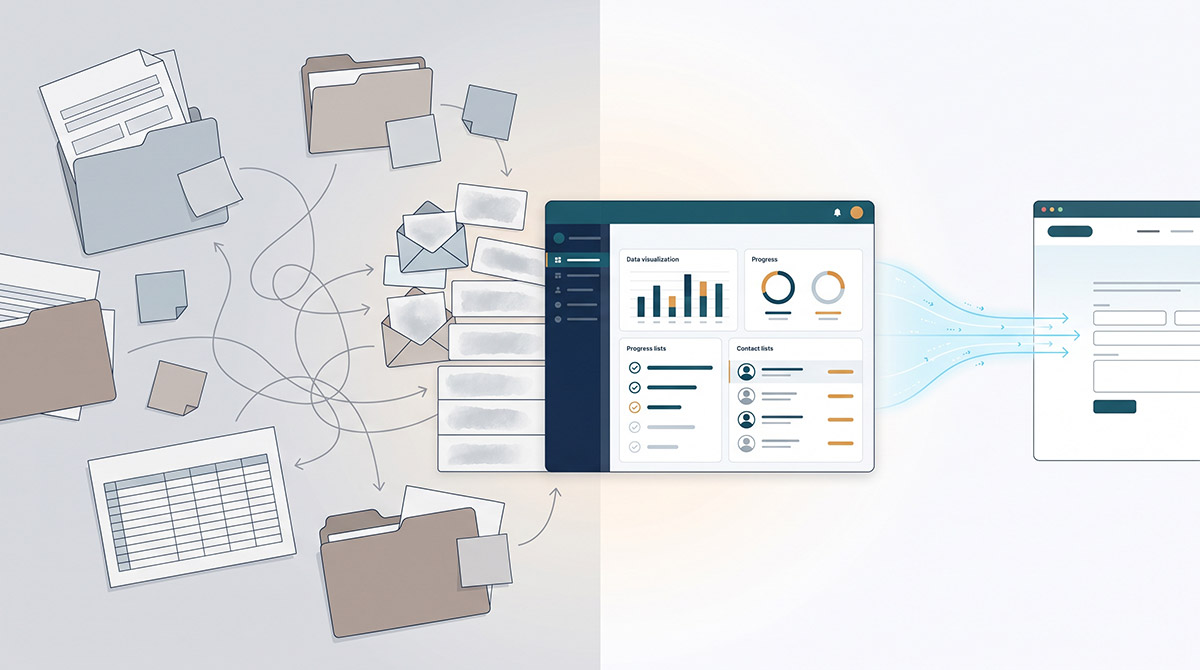
For organisations with complex digital environments, this goes further than button colours and headline tests. Conversion improvement depends on how your website, CRM, ecommerce platform, analytics, automation tools and internal workflows work together. If those systems are fragmented, performance stalls. You can generate demand, but you cannot capture it efficiently.
What conversion rate optimisation services actually cover
Conversion rate optimisation services are often misunderstood as isolated A/B tests. In practice, effective CRO is a structured performance discipline. It combines user research, analytics, UX, technical implementation and commercial analysis to improve the percentage of users who take valuable actions.
That action depends on the business model. For a government service, it may be a completed application or lower abandonment on a critical form. For a B2B organisation, it may be qualified lead submissions, demo bookings or resource downloads that feed into sales. For ecommerce, it is often a mix of product page engagement, cart completion, checkout conversion and repeat purchase behaviour.
The service should start by defining what conversion means in commercial terms, not just platform metrics. More form fills are not useful if lead quality drops. A higher checkout rate can still hide margin issues if discounting is doing the heavy lifting. Good CRO keeps the focus on business value, not vanity metrics.
Why many CRO programs underperform
A common problem is treating CRO as a layer added after launch. The website goes live, traffic comes in, and then a separate team is asked to "optimise conversion" without access to platform logic, customer data structure, or operational constraints. That usually leads to surface-level changes with limited impact.
Another issue is weak measurement. If event tracking is incomplete, attribution is unreliable, or CRM data is disconnected from analytics, you cannot see where users are dropping off or which changes are producing better outcomes. Decisions become opinion-led rather than evidence-led.
Then there is the issue of scale. A single landing page experiment can help, but larger organisations often need to improve conversion across multiple templates, channels and user types. That requires a service model built around governance, prioritisation and technical coordination, not just ad hoc testing.
The building blocks of effective conversion rate optimisation services
Strong CRO work begins with diagnosis. Before changing anything, you need a clear view of current performance, user intent and operational constraints. That usually includes analytics review, funnel analysis, UX assessment, heatmapping, form analysis, content evaluation and technical performance checks.
From there, opportunities should be prioritised by likely impact, implementation effort and business relevance. Not every issue deserves equal attention. A minor wording improvement on a low-traffic page may be valid, but it should not distract from fixing a checkout step causing major abandonment or a lead routing issue that delays follow-up.
Execution is where many providers fall short. Recommendations alone do not improve conversion. The service needs design capability, development support and measurement discipline so changes are implemented properly and results can be assessed with confidence.
The final piece is iteration. Conversion is not a one-off project. User behaviour changes, acquisition channels shift, offers evolve and platforms age. The best results come from an ongoing cycle of research, testing, release and review.
Where conversion rate optimisation services create the most value
The clearest gains tend to appear where user intent is already strong but the experience is getting in the way. Service pages with healthy traffic but poor enquiry rates, ecommerce product pages with strong views and weak add-to-cart numbers, and forms with high starts but low completion are all obvious examples.
There is also substantial value in post-conversion optimisation. If leads are landing in the wrong system, being assigned manually or followed up too slowly, the website may not be the main problem. Improving conversion in that context means connecting forms, CRM workflows and automation so the handover is faster and cleaner. Less patchwork. More performance.
This is where an integrated approach matters. CRO should not sit apart from UX, development, analytics and operational systems. It should connect them. For businesses with multiple stakeholders and platforms, that connection reduces risk and creates a clearer line from user behaviour to commercial outcome.
What to expect from a serious CRO engagement
A credible provider should be able to explain how they identify opportunities, what evidence they use, how they prioritise changes and how they measure success. If the process is vague, the results usually are too.
You should also expect them to challenge assumptions. Internal teams often have strong views about why users are not converting, but those views are not always correct. Sometimes the problem is messaging. Sometimes it is navigation. Sometimes the issue is technical latency, mobile usability or poor handoff to the sales team. A good CRO partner does not simply validate opinions. They test them.
It is also reasonable to expect commercial context. Different organisations have different tolerances for risk, change velocity and experimentation. A high-volume ecommerce business may support frequent testing cycles. A regulated organisation may need more governance, longer approvals and stronger documentation. The service model should reflect that reality.
Choosing conversion rate optimisation services for complex organisations
If your organisation has a simple brochure website and one clear call to action, many CRO providers can make incremental improvements. But if you are managing multiple platforms, stakeholder groups and downstream systems, selection criteria should be stricter.
Look for strategic capability as well as tactical skill. The provider should understand user journeys, platform architecture, analytics integrity and operational workflows. They should be comfortable working across design, content, development and data, because conversion is affected by all of them.
Technical depth matters as well. Recommendations must be implementable within your platform environment, governance model and release process. There is little value in an elegant CRO roadmap that ignores CMS constraints, ecommerce logic, CRM dependencies or security requirements.
This is where ID Digital Agency's model is relevant. For organisations that need websites, platforms and marketing systems to work as one connected ecosystem, CRO is not treated as an isolated service. It sits within a broader performance framework that links UX, technology, data and operational efficiency.
The trade-offs to consider
Not every conversion uplift is worth taking. More aggressive forms can increase lead volume while reducing quality. More prominent promotions can lift sales while eroding margin. Simplifying content may improve completion rates but reduce informed decision-making for higher consideration purchases.
That is why the right approach is rarely about chasing a single metric. It is about balancing usability, commercial outcomes, brand trust and operational practicality. Sometimes the best decision is not the one that produces the biggest short-term uplift. It is the one that supports sustainable growth without creating downstream problems.
There is also a timing question. If your analytics setup is poor, your UX is outdated and your platform is unstable, heavy experimentation may be premature. In that case, foundational fixes will often produce a stronger return than formal testing. CRO works best when it is matched to organisational maturity.
A better way to think about CRO
The most useful way to view conversion rate optimisation services is as a business improvement function, not a campaign add-on. Done properly, CRO helps you make better use of existing demand, tighten the connection between digital experience and operational delivery, and improve the return on every other activity feeding traffic into the site.
It also creates discipline. Instead of redesigning based on preference, teams work from evidence. Instead of blaming traffic quality for every performance issue, they examine what happens after the click. Instead of running disconnected fixes, they improve the full path from first visit to completed action.
That shift matters. When digital platforms are connected, measured properly and improved continuously, conversion stops being a vague marketing ambition and becomes an operational advantage.
If your website is already attracting attention, the next growth opportunity may not be more traffic at all. It may be removing the friction that is stopping the right users from taking the next step.