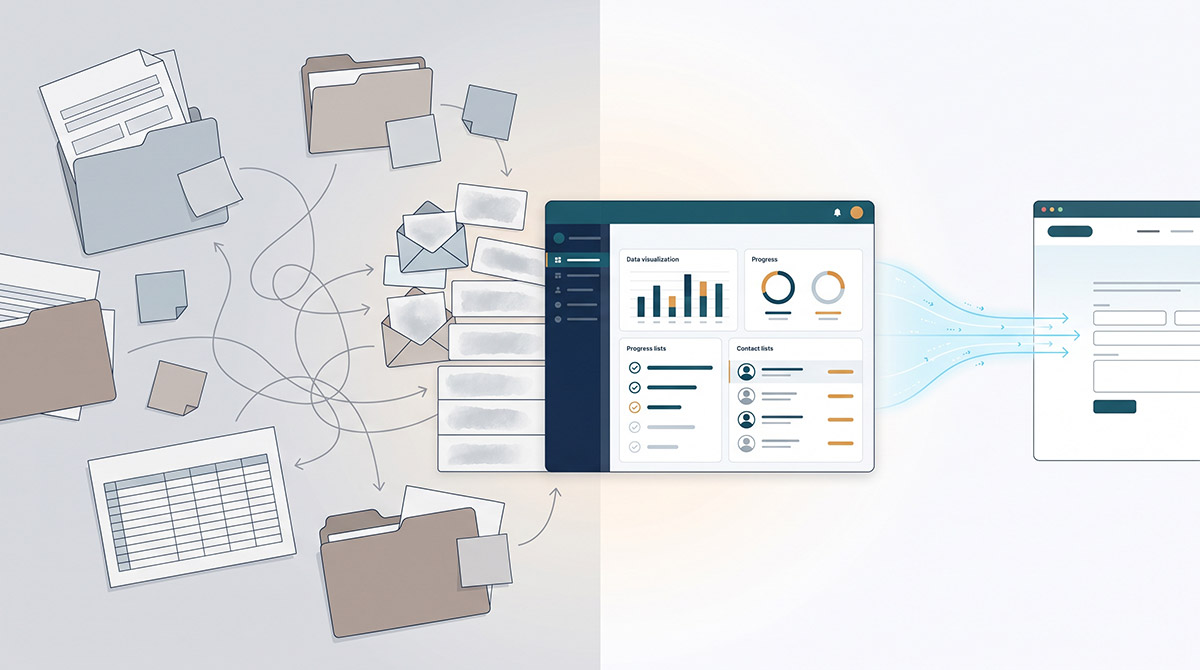


Most organisations do not have a website problem. They have a coordination problem. The issue sits between platforms, teams, data sources and vendors. That is where an Australian agency team either adds value or creates more friction.
If your digital environment includes a website, CRM, ecommerce platform, campaign activity, automation, reporting and internal workflows, the quality of the team matters far more than the sales pitch. A polished proposal means very little if strategy sits in one place, delivery in another and performance accountability nowhere at all.
What an Australian agency team really means
For complex organisations, an agency team should not be a loose collection of specialists working in parallel. It should operate as one accountable unit with shared commercial context, technical understanding and delivery discipline.
That sounds obvious, but many businesses still buy digital services in fragments. Brand strategy comes from one partner. UX from another. Development from a third. SEO gets added later. CRM integration becomes an afterthought. The result is predictable: duplicated effort, unclear ownership and a digital stack that costs more to maintain than it should.
A capable Australian agency team closes those gaps early. It makes decisions with the whole ecosystem in mind, not just the visible front end. That includes platform selection, information architecture, content structure, data flow, governance, performance measurement and operational handover.
The difference between production and partnership
Many agencies are structured to produce assets. Fewer are built to solve operational problems. That distinction matters if you are managing digital complexity across departments or business units.
A production-focused team can deliver a site, campaign or app to scope. A strategic partner looks harder at dependencies. Will the platform support future integrations? Can content teams govern it properly? Will leads move cleanly into the CRM? Can reporting tie digital activity back to business outcomes? If the answer is no, the work may launch on time and still fail commercially.
This is often where internal stakeholders lose confidence. Marketing sees design improvements, operations sees more manual work, and leadership sees another digital investment that has not improved control. Good delivery is not enough if the system around it remains disconnected.
What to look for in an Australian agency team
Start with structure. You need a team that can connect strategy, UX, technical delivery and optimisation without handing responsibility between disconnected departments. Senior involvement matters here. If experienced people sell the work and junior teams inherit the risk, important decisions get delayed or diluted.
You should also look for evidence of systems thinking. That means the team asks about your CRM, data model, approval workflows, ecommerce rules, accessibility obligations, hosting, analytics and governance model before final recommendations are made. If those questions never come up, the agency is probably solving for launch, not long-term performance.
Commercial discipline is another test. A strong team will be clear about trade-offs. Not every organisation needs a custom platform. Not every integration should happen in phase one. Not every feature deserves to be built if it adds complexity without measurable value. The right partner will help you make those calls with confidence, rather than inflating scope to increase fees.
Why integration is usually the real benchmark
The strongest agency teams understand that digital performance is rarely isolated. Search visibility depends on technical structure, content quality and site speed. Conversion rates depend on UX, trust signals, forms, CRM logic and follow-up workflows. Operational efficiency depends on data moving between systems without manual intervention.
That is why disconnected delivery creates compounding problems. A site might look better and still underperform because forms do not map properly into the CRM. An ecommerce build might increase orders while creating fulfilment bottlenecks in the back office. A campaign might drive leads that no one can attribute accurately.
An integrated team reduces these risks by designing the ecosystem, not just the interface. For organisations with multiple stakeholders, compliance requirements or legacy systems, that approach is not a nice extra. It is basic risk management.
When local context matters
An Australian market presence is not automatically a differentiator, but local context can matter. Governance expectations, accessibility standards, stakeholder environments and procurement processes often require a level of familiarity that offshore or heavily distributed teams may not provide consistently.
This is particularly relevant for government, enterprise and regulated sectors where approval pathways, security considerations and content governance are part of the job, not edge cases. In those environments, speed without control is not an advantage.
For that reason, many organisations prefer a senior, in-house model where strategy, delivery and optimisation sit closer together. That creates better continuity and fewer communication gaps across the life of the project.
The standard worth holding
A credible agency team should leave you with more than a better-looking digital presence. It should improve visibility, simplify operations, reduce duplication and give your internal teams more control over what happens next.
That is the benchmark ID Digital Agency works to because complex organisations do not need more patchwork. They need digital systems that connect properly, perform consistently and support growth without creating new layers of manual effort.
When you assess an agency, look past the portfolio first. Ask how the team thinks, how it governs delivery and how it handles integration under pressure. The right answer is rarely the flashiest one. It is the one that keeps working after launch.