

A growing share of search activity no longer ends with ten blue links and a click. Users ask a question, get a generated response, and often make a decision from that answer alone. That shift is why answer engine optimisation is now a practical consideration for organisations that rely on digital channels to inform, convert or support customers.
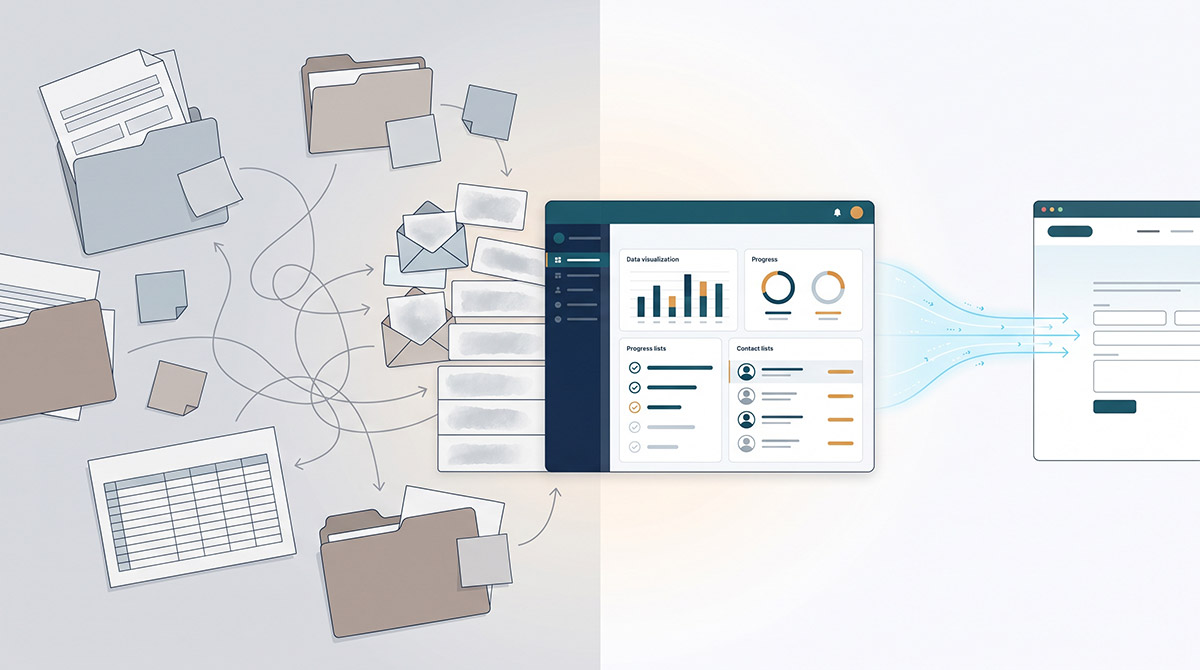
For complex organisations, this is not just an SEO trend with a new label. It changes how visibility works, how authority is interpreted, and how digital assets need to be structured. If your website, knowledge content, product data and supporting platforms are fragmented, answer engines will struggle to interpret your business clearly. And when machines cannot interpret you clearly, they are less likely to recommend you accurately.
What answer engine optimisation actually is
Answer engine optimisation is the practice of improving your digital presence so search engines, AI assistants and generative answer platforms can extract, trust and present your information in direct responses. The goal is not simply to rank a page. It is to become the source behind the answer.
That sounds close to SEO because it is. The difference is in how content is discovered and delivered. Traditional SEO focused heavily on page relevance, backlinks and click-through potential from search results. Answer engine optimisation still depends on relevance and authority, but it adds another layer: can a machine quickly identify the precise answer, understand the context, and feel confident enough to surface it without a user visiting multiple pages?
This is why many businesses see uneven results when they treat AEO as a content formatting exercise. Adding FAQ blocks alone will not fix weak information architecture, duplicate data across platforms, or vague service messaging. Answer engines reward clarity, consistency and structure. They are less forgiving of messy ecosystems.
Why answer engine optimisation matters now
The commercial issue is straightforward. If users get answers before they get to your website, part of your visibility has shifted upstream.
That creates both risk and opportunity. The risk is obvious: fewer clicks, fewer chances to control the journey, and more dependency on how third-party systems interpret your business. The opportunity is that brands with clear expertise and well-structured information can gain disproportionate visibility, especially in high-intent categories where trust matters.
For government, enterprise and growth-focused mid-market organisations, this matters beyond marketing. Answer engines increasingly influence support queries, procurement research, service comparisons and early-stage vendor evaluation. If your content is unclear, outdated or disconnected from the systems that power it, you are not just missing traffic. You are increasing the chance of being misunderstood.
That is one reason this work sits best within a broader digital performance model. AEO is not separate from platform design, content governance, SEO, analytics or CRM logic. It depends on all of them.
How answer engines decide what to surface
No platform gives a complete playbook, and the mechanics change quickly. Still, a consistent pattern is emerging. Answer engines look for signals that suggest your information is both relevant and dependable.
First, they need content that directly addresses real questions. This sounds basic, but many sites still bury useful information under brand-led copy, generic headlines and thin service pages. Machines need explicit statements, not just implied expertise.
Second, they look for structural clarity. Clear heading hierarchy, clean page relationships, accessible HTML, schema where appropriate, and tightly organised topic coverage all help machines interpret content accurately.
Third, they weigh authority and consistency. If your site says one thing, your product catalogue says another, your help centre is outdated and your business details vary across channels, confidence drops. Answer engines do not handle contradiction well.
Fourth, they are influenced by broader trust signals. These can include brand mentions, citations, topical depth, technical quality and user engagement patterns. The exact weighting will vary, but the principle is stable: businesses that are easier to verify are easier to surface.
A practical approach to answer engine optimisation
The most effective answer engine optimisation strategies start with architecture, not publishing volume. Before producing more content, it is worth asking whether your current ecosystem gives machines a coherent version of your business.
Start with high-intent questions
Not every query matters equally. Focus first on questions tied to service selection, product comparison, pricing logic, implementation concerns, compliance, support and procurement. These are the questions that influence revenue, conversion quality and customer confidence.
For each question, assess whether your site provides a direct answer, whether that answer is current, and whether it sits within a page that establishes broader context. Short answers help machines extract information, but surrounding detail helps them trust it.
Tighten content structure
Good AEO content is usually easier for humans to use as well. Pages should have a clear purpose, a logical heading structure, scannable supporting information and straightforward language. If the main answer takes six paragraphs of positioning copy to appear, the page is underperforming.
This does not mean every page needs to sound mechanical. It means the user and the machine should both be able to identify what the page is about, what question it answers, and why that answer is credible.
Fix inconsistency across systems
This is where many organisations run into trouble. Service descriptions on the website do not match sales collateral. Product details differ between ecommerce, ERP and support systems. Team updates happen in one platform but not another. Answer engines pull from a broad web of signals, so inconsistency becomes a visibility problem.
For organisations with meaningful digital complexity, this is not a content team issue alone. It is an integration and governance issue. ID Digital Agency often sees performance constraints that are less about channel tactics and more about disconnected systems feeding inconsistent information into the market.
Build topical depth, not content clutter
A common mistake is publishing dozens of low-value pages around minor keyword variations. That approach was weak even in traditional SEO. In AEO, it can make your expertise look shallow or repetitive.
A better model is topic coverage with substance. Create strong core pages, then support them with related content that answers adjacent questions, handles objections, explains processes and clarifies terminology. Depth helps machines understand that your organisation has genuine subject authority rather than isolated fragments of content.
Support content with technical quality
If your site is slow, poorly rendered on mobile, blocked by technical issues or difficult to crawl, your content becomes harder to trust and extract. Technical SEO still matters because answer engines still rely on accessible, well-structured source material.
Schema can help in specific cases, particularly for FAQs, products, organisations and articles, but it should not be treated as a shortcut. Mark-up improves interpretation when the underlying content is already solid. It does not compensate for vague messaging or weak information design.
Where AEO fits with SEO
Answer engine optimisation is not replacing SEO. It is extending it.
Strong organic performance still supports AEO because many of the underlying signals overlap: relevance, authority, technical accessibility and content quality. But success metrics are changing. Rankings and clicks still matter, yet they no longer tell the whole story. Brands also need to understand whether they are being cited, summarised or referenced within answer environments, and whether those answers are accurate.
This creates a measurement challenge. Attribution is less tidy when users get what they need from a generated response, then convert later through another channel. That does not make AEO less valuable. It means reporting needs to be more mature, with a view across search visibility, branded demand, assisted conversions and customer journey data.
The trade-offs leaders should understand
There is no universal AEO playbook because goals differ. A publisher chasing pageviews will approach this differently from a service business qualifying leads or a government body improving access to information.
There is also a strategic tension in giving direct answers. In some cases, answering clearly reduces low-quality enquiries and improves lead quality. In others, it may reduce clicks on informational pages. Whether that is a problem depends on the role those pages play in your funnel.
The other trade-off is operational. Effective AEO requires content governance, structured data, technical maintenance and system alignment. If teams are already stretched and platforms are disconnected, adding more content into the mix can increase complexity rather than improve performance. That is why the right question is not, how do we publish more for AI search? It is, how do we make our digital ecosystem easier to understand and trust?
What good looks like
A business positioned well for answer engines usually has a few things in common. Its website explains services and offerings plainly. Key questions are answered directly. Information is consistent across platforms. Content is current, governed and tied to real user intent. The technical foundation is clean. Most importantly, the organisation has a coherent digital system rather than a collection of disconnected assets.
That is the wider point. Answer engine optimisation is not a trick for capturing AI traffic. It is a discipline that rewards operational clarity. The businesses that perform best will not be the ones chasing every new feature. They will be the ones making it easy for both people and machines to understand exactly what they do, why they are credible and where they fit.
If your organisation is investing in digital performance, this is a good time to treat clarity as infrastructure, not copy polish.