

Most websites don’t fail at launch
They fail after.
They look good. They get signed off. Everyone’s happy for about two weeks.
Then:
- Traffic stalls
- Leads don’t come through
- The team stops using it properly
- And it slowly becomes a digital brochure instead of a growth tool
The issue is not design. It is not development.
It is the lack of connection between strategy, experience, technology and marketing.
The real reasons website projects fail
Let’s be honest. These are patterns we see all the time.
1. No clear strategy from the start
Most projects jump straight into design.
No audience clarity. No conversion planning. No alignment with business goals.
According to HubSpot, websites that are built around clear user journeys and defined goals consistently outperform those that are not.
If strategy is missing, everything else becomes guesswork.
Internal connection: digital strategy.
2. Design without purpose
A good looking website is not the goal.
A performing website is.
We often see:
- Over-designed pages with no hierarchy
- Too many distractions
- No clear calls to action
Research from Nielsen Norman Group shows users scan, not read. If your design does not guide them, they leave.
Internal connection: web UX and UI.
3. Development that is not built for scale
Shortcuts in development always show up later.
- Slow load speeds
- Poor mobile performance
- Difficult integrations
- Limited flexibility
Insights from Google confirm that even small delays in load time can significantly impact conversion rates.
Internal connection: web design and development.
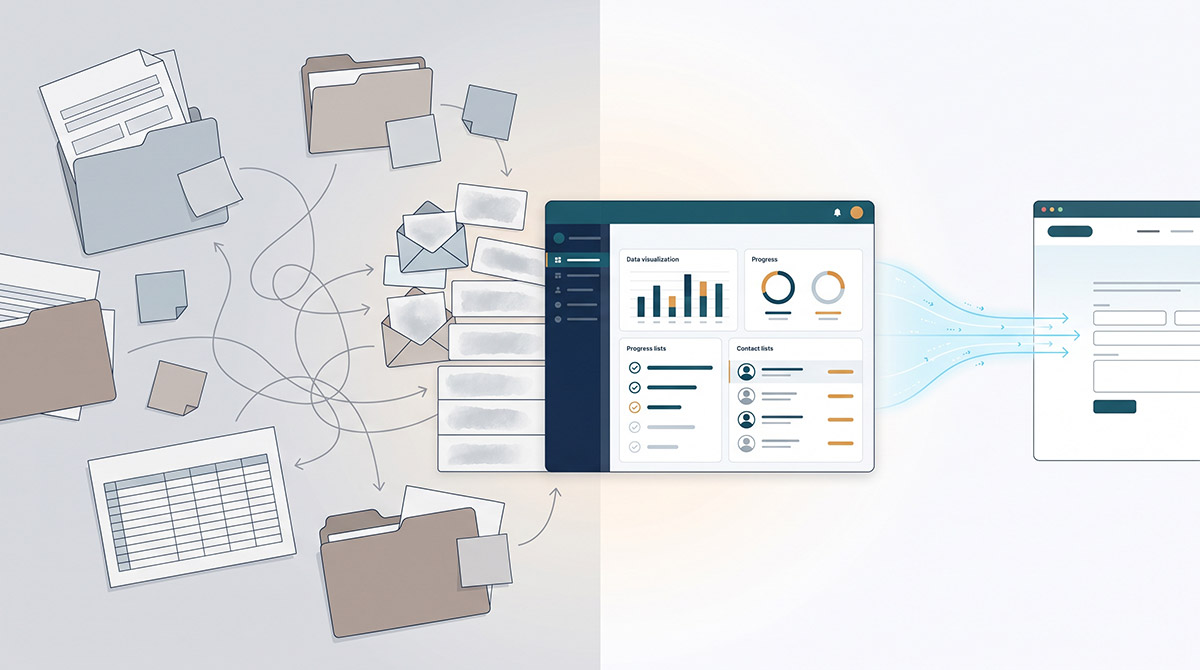
4. Disconnected systems
This is one of the biggest issues.
The website sits here. CRM sits there. Marketing tools sit somewhere else.
Nothing talks to each other.
- Leads get lost
- Data is inconsistent
- Teams operate in silos
This is where most websites fall apart.
Internal connection: the digital ecosystem
5. No ongoing optimisation
A website is not a one-time project.
It is a living platform.
Without:
- Data tracking
- Conversion optimisation
- Content updates
Performance drops quickly.
Top performing businesses treat their websites as ongoing growth assets, not finished products.
Internal connection: digital marketing and growth.
6. Lack of ownership internally
Even the best website will fail if no one owns it.
We see:
- No internal champion
- No content updates
- No accountability for performance
The result is stagnation.
What high performing websites do differently
Now let’s flip it.
The websites that actually perform share a very different approach.
1. Strategy drives everything
Every decision is based on:
- Audience
- Behaviour
- Business goals
Not opinion.
2. Clear user journeys
Users know exactly:
- Where they are
- What to do
- What happens next
No friction. No confusion.
3. Built for performance from day one
This includes:
- Speed
- SEO structure
- Mobile optimisation
- Scalable architecture
Not added later. Built in.
4. Fully connected systems
This is where the real value comes in.
A high performing website connects:
- CRM
- Marketing automation
- Analytics
- Sales pipelines
Everything feeds into everything.
5. Continuous improvement
The best websites are never finished.
They evolve based on:
- Data
- User behaviour
- Business growth
According to Forrester, companies that continuously optimise digital experiences outperform competitors in both conversion and customer retention.
The shift: from website to growth platform
Here’s the mindset change.
A website is no longer just a presence.
It is:
- A lead generation engine
- A sales support tool
- A data collection system
- A customer experience platform
When built properly, it becomes central to how your business operates.
What this means for your next project
If you are planning a new website, the key question is not:
“How does it look?”
It is:
“How does it perform across the entire business?”
Because that is where ROI lives.
Final thought
Most websites fail because they are built in isolation.
High performing websites succeed because they are connected.
At ID Digital Agency, we do not just build websites.
We build connected digital experiences that:
- Drive traffic
- Convert users
- Integrate systems
- Scale with your business
That is the difference.