
In 25 years of building digital products for Melbourne businesses, we have seen a lot of projects go wrong. Websites that launched over budget and underperformed. CRM implementations that no one used. Apps that solved the wrong problem beautifully.
We have also seen a lot of projects go spectacularly right — platforms that transformed how businesses operated, integrations that made entire teams more effective, digital ecosystems that became genuine competitive advantages.
The difference between the two categories is rarely budget. It is rarely the platform choice. It is almost never the design. After 25 years, we are confident enough to say it plainly: the thing that separates good digital projects from bad ones is the quality of the thinking before anyone writes a line of code.
The Brief That Saves Everything
Every failed digital project we have ever encountered had one thing in common in the rearview mirror: the brief was wrong, incomplete, or simply absent.
Not wrong in the sense that the client did not know what they wanted — most clients have a reasonably clear idea of what they want. Wrong in the sense that what they wanted and what their business actually needed were two different things, and no one sat down long enough to surface that gap before the build started.
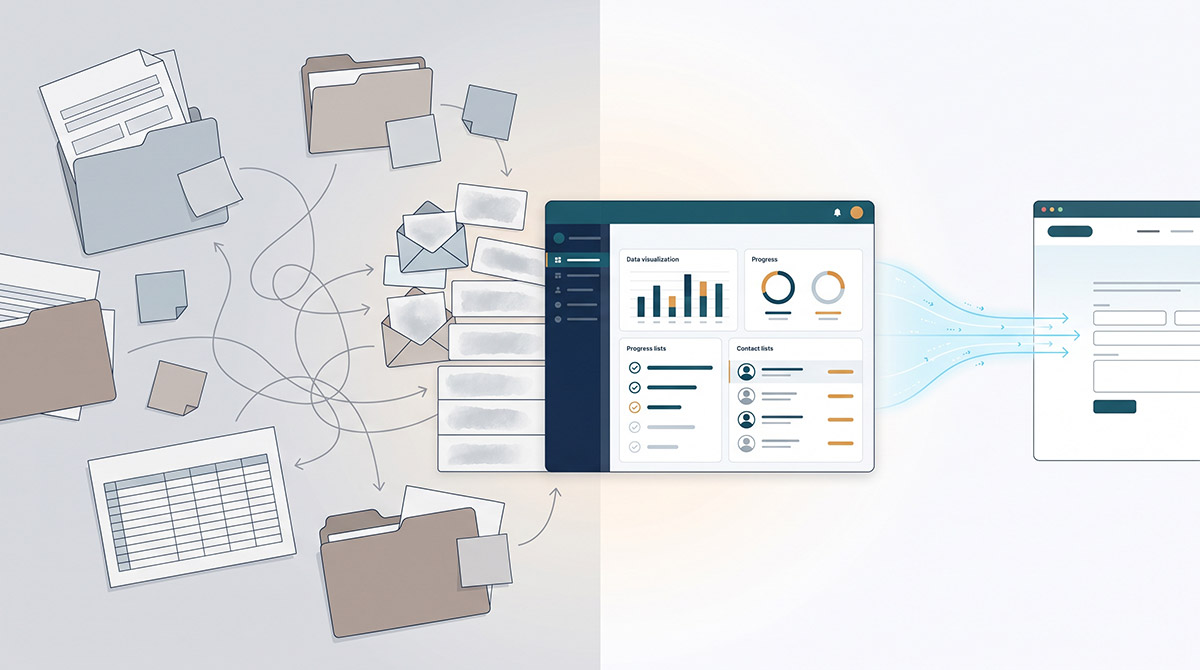
A website is a common example. A client comes to us wanting a new website. Clean design, fast load times, mobile-first. All reasonable. We ask: what should happen when someone fills in the contact form? What platforms does your team use to manage leads? Do you have a CRM? Does the site need to talk to your booking system?
These questions are not complicated. But they change the scope, the architecture, and the outcome of the project significantly. A website built without those answers is a site built for the wrong brief.
Our strategy process starts with these questions, not at the design stage →
Why In-House Matters More Than You Think
ID Digital Agency has operated with a fully in-house team for 25 years. No contractors. No offshore development. Design and code under one roof, in one conversation.
This is not a point of pride for its own sake — it is a structural decision with real consequences for project quality. When the designer and the developer are in the same building (or at minimum the same organisation), the conversations that matter happen naturally and early. Design decisions that would create technical problems get caught before they become technical problems. Development constraints inform design decisions before they become design constraints. The integration between how something looks and how it works is not a handover — it is a continuous dialogue.
Most digital project failures are communication failures. They happen in the gaps between separate agencies, separate teams, and separate disciplines that do not talk to each other until it is expensive to change course. An integrated team does not eliminate those gaps — it simply reduces them significantly.
The Projects That Teach You the Most
After 25 years, the projects we have learned the most from are not the successful ones. They are the ones where something went wrong early enough that we could fix it — and in doing so, developed the processes and instincts that prevent the same issue from arising again.
We built a middleware integration between two enterprise platforms that were not designed to talk to each other — and learned exactly how much complexity is hidden in the phrase "just connect the two systems." We built a multi-brand digital ecosystem for a national organisation and discovered that governance and content management workflows matter as much as the technical architecture. We built an app for a business with 600,000 users and experienced firsthand what the gap between "technically working" and "production-ready at scale" actually looks like.
Those experiences are in the walls here. They inform how we scope projects, how we ask questions at the start, how we build contingency into timelines, and how we communicate with clients when something unexpected emerges.
What 2026 Looks Like From Here
Melbourne's digital landscape in 2026 is more sophisticated than it has ever been — and more confusing, in equal measure. AI tools are generating real productivity gains and real noise simultaneously. HubSpot's Breeze AI is genuinely useful; the average AI-generated website is not. Automation is more accessible than ever to small businesses; poorly built automation is also more prevalent than ever.
The fundamentals have not changed. The best digital outcomes still come from a clear strategy, a connected approach, an honest brief, and a team that does not cut corners on the thinking before the building starts.
After 25 years, that conviction has not wavered. If anything, the increasing pace and complexity of the digital environment makes it more important than ever.
Frequently Asked Questions
What kinds of businesses does ID Digital Agency work with? We work across a wide range of sectors — tourism and hospitality, professional services, healthcare, local government, national consumer brands, and B2B organisations. Our clients range from ambitious Melbourne SMEs to national brands with complex, multi-platform digital requirements. The common thread is businesses that take their digital presence seriously and want a strategic partner rather than just a vendor.
What does "in-house team, no contractors" actually mean for a project? It means that the team you meet at the start of a project is the team that builds it. Your designer is in conversation with your developer. Your strategist is in conversation with both. There is no translation layer between disciplines, no briefing of an offshore team at 11pm, and no accountability gap when something needs to change mid-project. For complex integrations and ecosystem projects especially, this matters enormously.
How do you approach projects differently from a typical web agency? We start from the digital ecosystem, not the deliverable. Before we design a single page, we want to understand how your business operates, what platforms you use, what data needs to flow where, and what success looks like beyond the launch day. That framing changes what we build and, more importantly, how we build it.
Do you take on smaller projects, or is there a minimum engagement size? We work across a range of project sizes and engagement types — from a focused HubSpot setup for a growing Melbourne business to a multi-year digital ecosystem build for a national organisation. We assess each brief on its merits and are upfront during scoping about whether a project is the right fit for both sides.
How does ID Digital Agency stay current with platforms and tools like HubSpot, AI, and emerging web technologies? Active use and active curiosity. We integrate AI tools into our own workflows, we implement the platforms we recommend for clients, and we deliberately maintain the in-house expertise across both design and development that allows us to evaluate new tools on their merits rather than deferring to vendor marketing. The best way to understand whether a tool works is to use it seriously — not to read the case studies.
ID Digital Agency is a Melbourne-based digital agency with 25 years of experience building websites, platforms, apps, and connected digital ecosystems for Australian businesses. Explore our work →